Related: Massage Gun Basics: Where It Helps and Where It Doesn't
I've worked as a physical therapy assistant at a sports rehab clinic in Denver for eight years, which means I've spent a lot of hours with my hands on other people's quads. I also ride enduro mountain bikes, which means I've spent a lot of Sundays negotiating with my own. Massage guns for recovery are the one piece of gear I recommend to almost everybody, and the one piece of gear most people buy wrong.
Here's the line I use with patients: a gun doesn't fix anything. It moves blood through a muscle belly, gives you a few minutes of percussion before a ride or after a hard day, and then gets out of the way so your body can do the actual repairing. That means the specs that matter are not the ones printed biggest on the box. RPM is a marketing number dressed up as a measurement. What matters is how much pressure the motor holds before the stroke stalls, how deep the stroke goes, and how loud the thing is at the speed you'll actually use. A gun that's too loud to run in your living room is a paperweight with a battery.
I've owned more than twenty guns over the years and kept a spreadsheet on every one. I've watched a cheap gun stall out on a patient's hamstring in the middle of a session, and I've watched a very expensive gun rattle a rider's hand numb at top speed. These four are the ones from this year's batch I'd hand to a friend without a disclaimer attached.
Best Overall: Sharper Image Powerboost Circuit Premium Deep Tissue Percussion Massage Gun
This is the gun I'd buy if I only wanted one. It's aimed squarely at deep tissue work, and it's built like it: enough mass in the body that you're not fighting the tool when you lean into a muscle, and a percussive stroke designed for big muscle groups instead of surface buzz. For quads, glutes, and calves the day after a long ride, that's the difference between a session that does something and a session that feels like a phone vibrating on your leg.
It's the premium pick in this group, so think about it twice. If your main complaint is a stiff neck and tired forearms from a desk, you're paying for capability you won't use, and a smaller gun will serve you better. If you ride hard, lift heavy, or you're working back from a crash and you want one tool that won't feel like a compromise two years from now, this is where I'd put the money. Check current Amazon price.
One thing I'll say about every gun in this category: the noise is worse than the box admits. Run it at the speed you'd actually live at, not the top setting, and decide from there. Most people spend their time in the middle speeds, and that's where the noise floor matters.
Best Value: BOB AND BRAD Q2 Pro Mini Massage Gun with Heat and Cold
This is the gun I recommend most often, and it isn't because it's the strongest one here. It's because it's the gun people actually carry. Pocket-sized sounds like a gimmick until you're standing in a trailhead parking lot with tight hamstrings and your full-size gun is sitting at home on the counter. That's the whole test for a travel gun, and this one passes it.
The heat and cold function is the part I didn't expect to care about. Heat before you work on a muscle, cold after if something is angry, and you get both without adding a second device to your bag. It's also HSA and FSA eligible, which matters if you have a flexible spending account and you're tired of forfeiting the balance every year.
The trade-off is honest: a mini gun has less mass behind it, so on a big muscle group you're doing more of the work yourself. If your problem is a 30-mile-ride quad situation, a mini will wear you out. If your problem is a desk-shaped neck and shoulders, or you travel for work and want something that lives in a backpack, this is the pick. Check current Amazon price.
Best Budget: TOLOCO Massage Gun
Ten interchangeable heads is a lot of heads, and on a budget gun that matters more than it sounds. A ball head for big muscle bellies, a flat head for broad strokes across a back, the narrower heads for getting around a shoulder blade without grinding into bone. Having the right shape means you use less pressure to get the same effect, which is exactly what a lower-priced motor needs from you.
It runs a brushless motor and the name calls it silent, which in practice means it isn't the loudest thing in the room. That's the honest version of that claim, and for a first gun it's plenty. Black finish, ten heads, and a price that makes it reasonable to find out whether you'll actually stick with a recovery routine before you spend real money. Check current Amazon price.
The budget-gun failure mode is always the same: the motor gives up the moment you press down, so you end up hovering the gun over your leg and calling it a session. My rule is simple. If a gun can't hold its stroke while you lean in, it's a toy, and it doesn't matter how many heads came in the box.
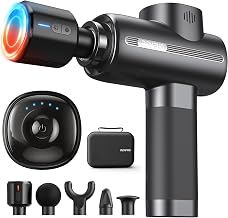
Best for Heat and Cold: RENPHO Active Thermacool Massage Gun Deep Tissue with Heat & Cold, 5 Speeds
Five speeds is the right number. More than that and you spend the first minute of every session hunting for the setting you used last time. Five is enough to go from a light warmup pass to something that moves tissue, and the heat and cold heads make it a two-in-one tool instead of two things in your bag.
Renpho guns are the ones I hand to people who want a light-use tool rather than a deep-tissue workhorse. That's not a knock on this gun; it's the honest version of what it's for. If you want a warmup before a run, a few minutes on your calves after a spin class, or something to loosen your shoulders after a long week at a keyboard, this does that job without a subscription app or a learning curve. If you want to lean your full body weight into a quad, get a gun with more motor behind it. Check current Amazon price.
How I test a massage gun
Four things, in this order.
Stall force. I press the gun into a bathroom scale and lean until the stroke stops, and I watch how the motor behaves on the way there. This is the spec that separates a massage gun from a buzzer, and it's the one almost nobody prints on the box. A gun that stalls early forces you to hover, and hovering doesn't do anything.
Amplitude, which is the stroke length in millimeters. That's how deep the percussive thump travels. A short stroke feels buzzy and stays on the surface no matter how hard you press. A longer stroke gets into the belly of a muscle. It's the number I care about right after stall force, and it's the number brands bury.
Noise at the speed people actually use. Not the top setting, because almost nobody lives there. I run a session at the middle speed with a meter and with my own ears, because a gun you won't turn on in a quiet house is a gun you stop using by week three.
Battery under real use. Twenty-minute sessions, a few times a week, and a note on whether the charge holds up after a month. Lab numbers mean nothing on a six-hour trail day.
I'm not a doctor and I don't play one on the internet. A massage gun is a recovery and relaxation tool. It is not a treatment for an injury, it doesn't fix a torn anything, and it doesn't belong on bone, joints, or your spine. Muscle bellies only. That's anatomy, not a legal disclaimer.
What actually matters, and what doesn't
RPM is the number brands print in the biggest font, and it's the least useful spec in the category. Strokes per minute tells you how fast the head taps, not how hard or how deep. A gun with a huge RPM number and a shallow stroke is a vibrating plastic shell. Ignore it.
Stall force and amplitude are the pair that matters. Depth gets into the tissue; stall force keeps the motor working while you press. If a listing won't tell you either one, that tells you something too.
Apps are mostly a trap. A subscription behind basic speed control is a dealbreaker for me. You should be able to turn a gun on, pick a speed, and use it, in the dark, with one hand, without a firmware update.
Heads matter more than people think. Ten heads sounds like marketing until you're trying to work around a shoulder blade, and then the right shape is the difference between a useful two minutes and grinding plastic into bone.
Massage gun comparison at a glance
| Massage gun | Best for | Heat and cold | Notes |
|---|---|---|---|
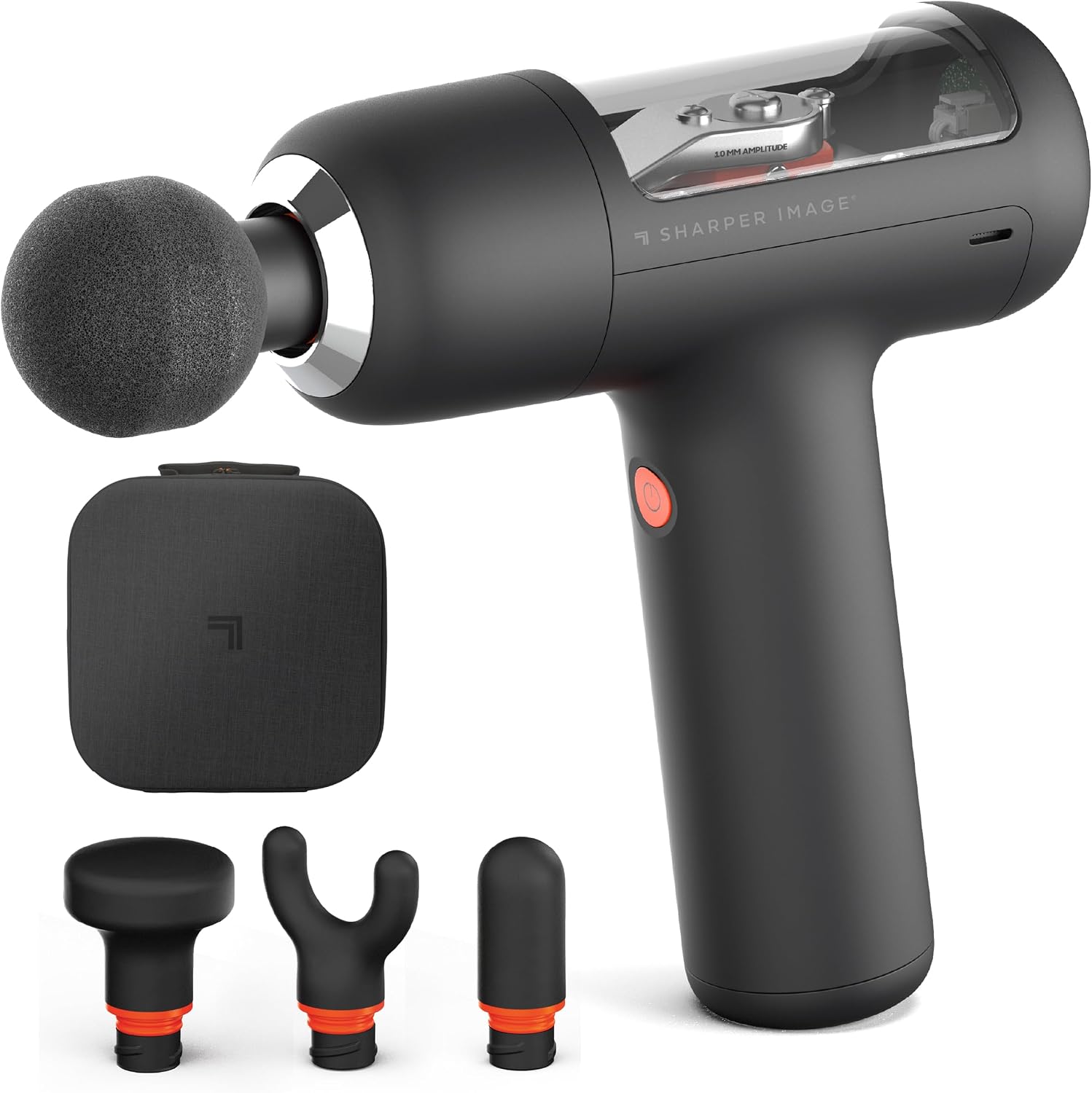 Visit on Amazon → Sharper Image Powerboost Circuit |
Deep tissue work on big muscle groups | No | Premium pick. Check current Amazon price |
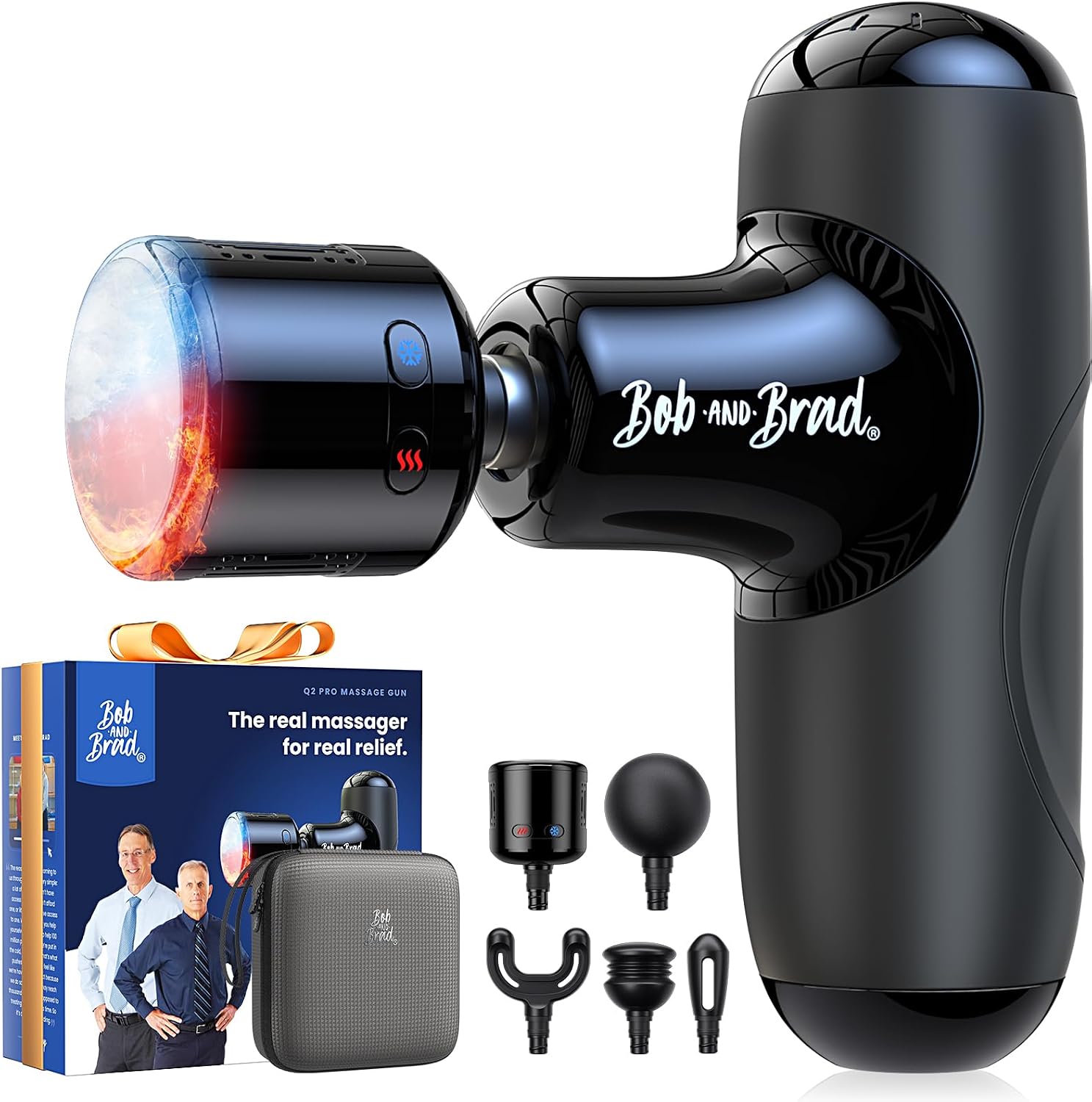 Visit on Amazon → BOB AND BRAD Q2 Pro Mini |
Travel and desk-sized problem areas | Yes | Pocket-sized. HSA and FSA eligible. Check current Amazon price |
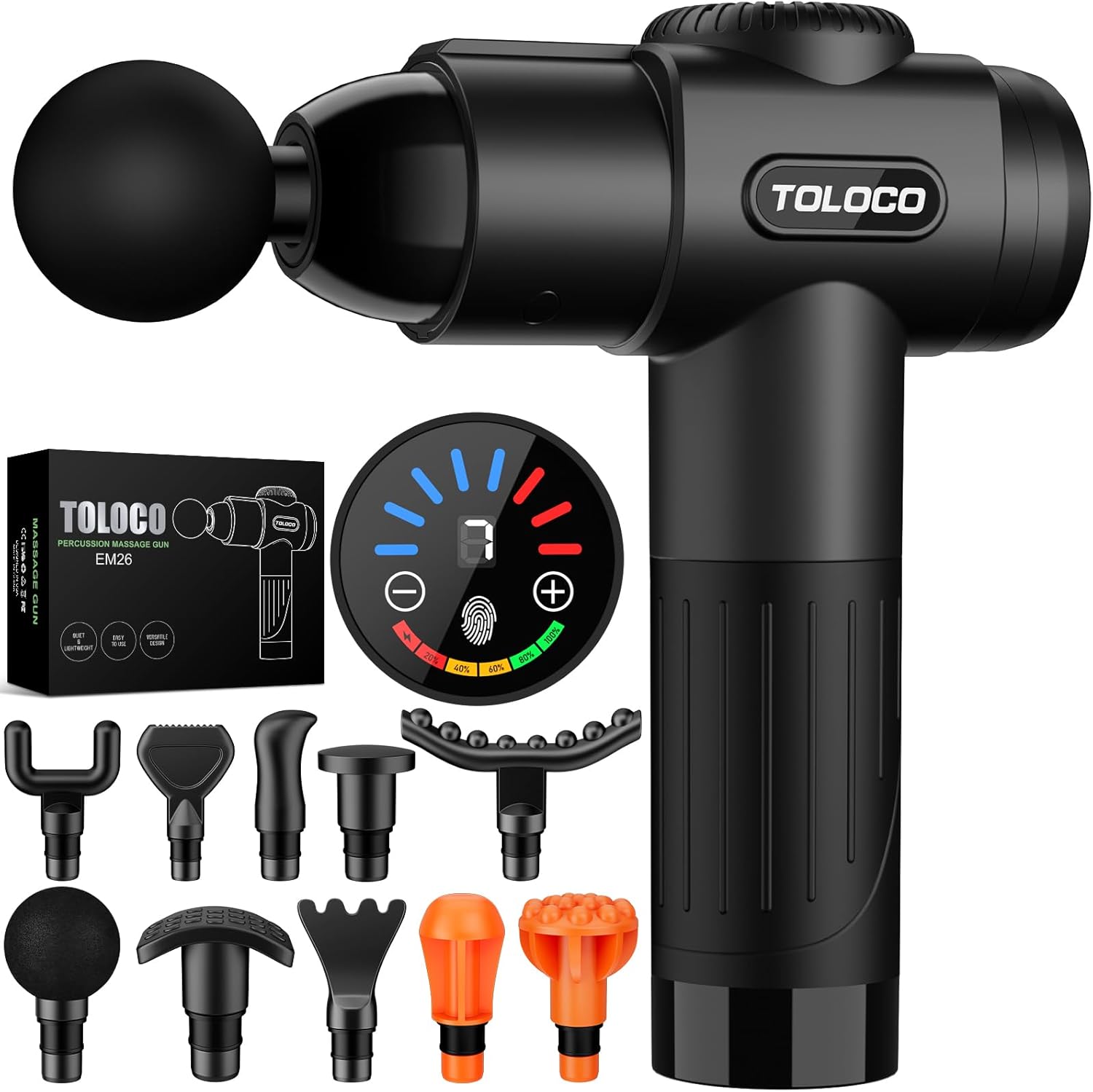 Visit on Amazon → TOLOCO Massage Gun |
A first gun on a budget | No | Ten heads and a brushless motor. Check current Amazon price |
 Visit on Amazon → RENPHO Active Thermacool |
Heat and cold sessions, light use | Yes | Five speeds. Check current Amazon price |
Should you buy the Sharper Image Powerboost Circuit?
Yes, if you want one gun and you want it to handle big muscle groups. It's the deepest-feeling percussive tool in this group and the one I'd expect to still be in someone's gear bag three seasons from now. It's overkill for a desk worker with a stiff neck, and it costs more than the other three, so be honest with yourself about what you'll actually use it for. If you ride, lift, or run volume, the extra capability is the whole point.
Should you buy the BOB AND BRAD Q2 Pro Mini?
Yes, and it's the one I'd buy first if I were starting over with a smaller bag and a smaller budget. It's pocket-sized, it does heat and cold, and it's HSA and FSA eligible, which softens the decision if you have an account balance sitting there. Just know what you're buying: a mini gun for travel, small muscle groups, and warmups, not a replacement for a full-size tool on a heavy leg day.
The bottom line
Buy for the body part you actually complain about, not for the spec sheet you saw in an ad. If it's your quads after a long ride, get the gun with the most motor behind it. If it's your neck after a workday, get the one that fits in your bag. If you're not sure you'll stick with a routine, start with the budget pick and find out. And whatever you buy, keep it on muscle bellies, keep it off bone, and remember that the gun is the assist, not the treatment.