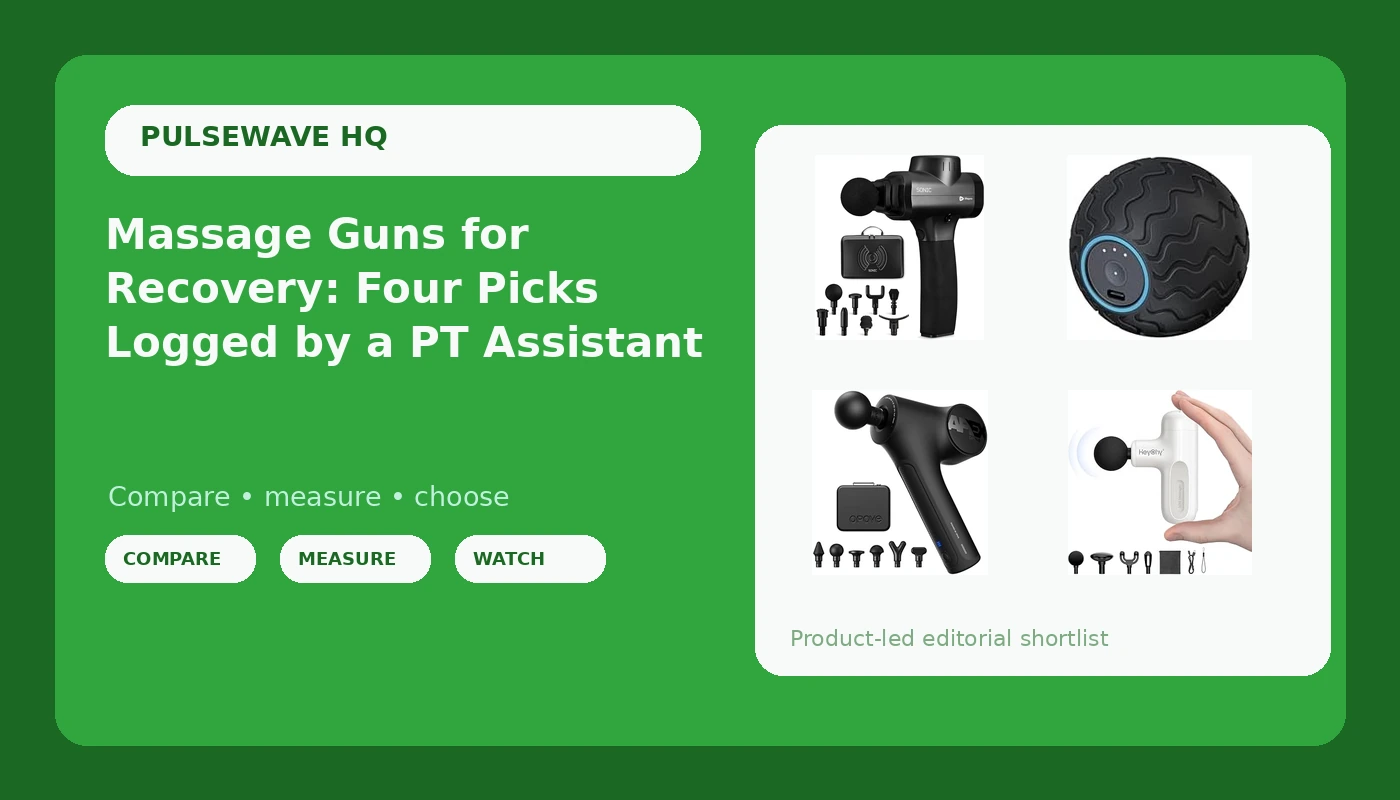
I've spent eight years as a physical therapy assistant at a sports rehab clinic in Denver, and six of those years riding enduro on the Front Range. That means I hand massage guns to patients all week, then use one on my own quads every Sunday after a long Saturday on the trail. So when people ask me to name the best massage guns for recovery, they get two answers, and they aren't always the same gun.
Here's what I say first, every time: a massage gun is a recovery and warmup tool. It moves blood through a muscle belly and gives your nervous system a reason to settle down. It doesn't fix an injury, it doesn't treat pain, and it never goes on bone, joints, or the spine. Muscle bellies only. That's not a disclaimer, that's anatomy. If you want a treatment plan, book with a PT.
I've owned more than 20 guns and kept a spreadsheet on every one: stall force, stroke length, noise at the speeds people actually use, and battery life across real 20-minute sessions rather than a lab bench. The four guns below cover the range of what's worth buying in 2026, and they solve four different problems.
The short answer: the Opove Apex is the strongest recovery tool of the four, because 14.5mm of amplitude is what decides whether a gun reaches muscle instead of buzzing the surface. If you want something you'll actually carry and use, the HEYCHY Super Mini and the Therabody WaveSolo make a real case for going smaller.
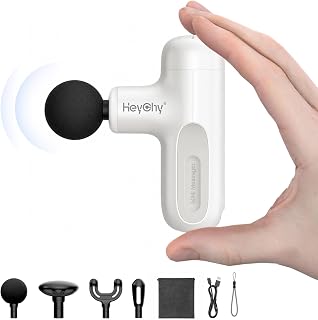
HEYCHY Super Mini Massage Gun
Tiny enough to live in a hydration pack, and 3000 RPM in a body this size is the spec that makes it interesting
Mini form factor means a shallow stroke, and it stalls if you lean on it
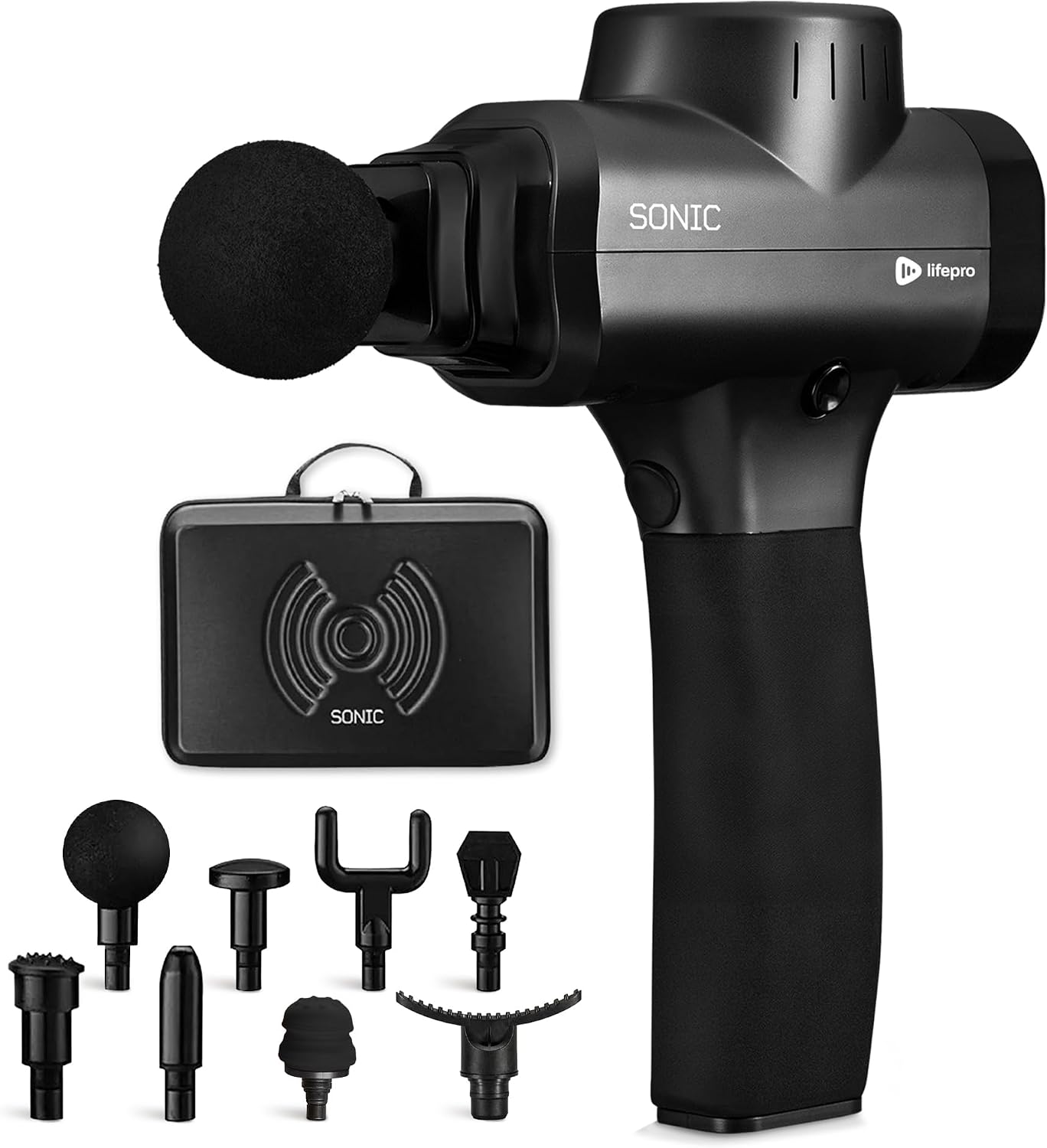
Lifepro Sonic Massage Gun
8 heads and 5 speeds make it a kit rather than a single tool, at the lowest-risk entry point here
Stall force gives up before a tight quad does, which limits it to light work
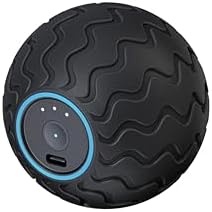
Therabody WaveSolo
The quietest and most portable option, with three customizable frequencies and QuietRoll construction
It's a vibration device, not percussion, so it never goes deep
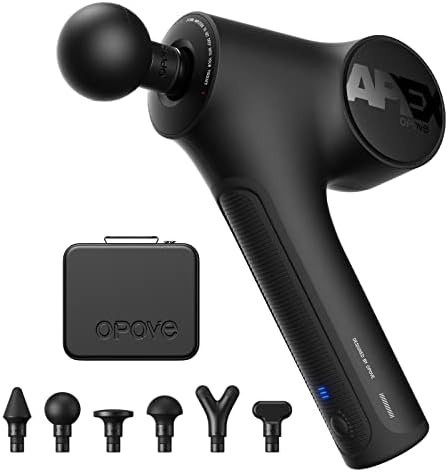
Opove Apex Massage Gun
14.5mm of amplitude, the deepest stroke in this group, built for big muscle groups
Full-size and heavier in the hand, which is more gun than a casual user needs
Prices and availability were captured from Amazon Creators API and may change.
How I judge a massage gun
Four things, in order.
Amplitude. Stroke length in millimeters. How deep the percussive thump goes. A 10mm gun feels like a firm tap. Fourteen millimeters and up starts to feel like something is working on the muscle instead of the skin over it. Amplitude is the line between a recovery tool and a buzzer.
Stall force. How much pressure the motor takes before the stroke stops moving. This is the spec that separates a real gun from a toy, and it's the one listings tend to hide. Press a cheap gun into a tight quad and the head stops oscillating and just sits there humming. Press a good one in and it keeps thumping. If a listing says nothing about how the gun behaves under load, that silence is information.
Noise at usable speeds. Not the number at speed one. The number at the speed you'd actually run on a hamstring. A gun you won't use because it's too loud is a paperweight with a battery.
Battery under real sessions. Twenty minutes a day, five days a week, is a different test than a lab discharge curve.
RPM is the number printed biggest on the box and it means the least on its own. Strokes per minute without amplitude behind it is a vibration device with a marketing budget.
Opove Apex: the deep-tissue pick
The Opove Apex is the only gun in this group that leads with amplitude, and that's why it's the one I'd point a mountain biker or a heavy lifter toward. Its 14.5mm stroke sits in the range where percussion starts to reach a quad or a glute instead of just the surface.
That depth is exactly what you want on the big muscle groups: quads, glutes, hamstrings, calves, lats. It's also why I'd tell a casual user to think twice. A gun with this much stroke on a thinner area like the shin or the forearm can feel like too much, and if you're the kind of person who wants one button and zero thinking, this is more tool than you need.
The other trade-off is size. Deep amplitude needs a bigger motor and a bigger body, which means more weight in your hand during a 20-minute session. If you work on your own shoulders and upper back, that weight is noticeable by minute twelve.
Lifepro Sonic: the budget all-rounder
The Lifepro Sonic is the gun I recommend when someone wants to try percussion without committing serious money, and 8 heads with 5 speeds makes it feel like a kit rather than one tool. Different heads for different jobs isn't a gimmick. A flat head on a big quad and a round head on a calf genuinely feel different, and the variety keeps you using the thing.
The honest caveat is the same one I give about most budget percussion guns: stall force. When you lean into a tight quad, budget motors tend to give up before the muscle does. The head keeps humming, but the stroke stops. For light use on arms, calves, and post-desk shoulders, that's fine. For someone whose real problem is a 30-mile ride's worth of quad tension, it's the reason to spend more.
The other thing to know is that eight heads means eight things to lose in a gear bag. You'll use two of them 90 percent of the time.
HEYCHY Super Mini: the one that lives in your bag
The HEYCHY Super Mini is the gun I'd hand someone who has never once thought about recovery gear and never wants to. It disappears into a hydration pack or a gym bag, and 3000 RPM in a body that small is the spec that makes it worth a look.
Mini guns trade amplitude for portability, and that's physics, not a design flaw. You get a shallow stroke, which is fine for calves, forearms, and the top of the shoulder, and less useful for a deep quad. Minis also stall under hard pressure, so you use them with a light hand and let the speed do the work instead of your body weight.
Where the mini wins is compliance. The best recovery tool is the one that's with you. A gun sitting in a drawer at home does nothing for you at a trailhead, and a mini that's always in the bag gets used on the tailgate before the drive home. That's a real advantage, and it's why I keep a small gun in my own pack even though I'd never call it a deep-tissue tool.
Therabody WaveSolo: vibration, not percussion
The WaveSolo is the odd one out here, and it's worth being precise about why. It's a handheld vibration device, not a percussion gun. There's no thumping piston and no amplitude in the massage-gun sense. What it does is vibrate at three customizable frequencies, with QuietRoll technology to keep it from rattling, and it pairs over Bluetooth. It's shaped like a ball you roll across a muscle.
So it isn't competing with the Apex on depth. It competes on portability and discretion. This is the one you can run on a calf at a desk without sounding like a dental office, and the one that fits in a carry-on. For waking a muscle up before a workout, for a light flush after an easy run, and for the person who wants something small, quiet, and technique-free, it works.
What it won't do is reach deep into a big muscle group the way a 14.5mm percussion gun will. If your recovery problem is a heavy leg day or a long ride in the mountains, vibration is the wrong tool for the main job. And I'm cautious about any device where the companion app is part of the pitch. A recovery tool should work when your phone is in another room.
What the specs mean when you're staring at a checkout page
Three numbers, ranked by how much they should move your decision.
Amplitude is the one you can't fake. No app, no preset, and no premium finish makes a shallow stroke deeper. If you want deep-tissue work, you need millimeters, and the Apex is the only gun here that advertises 14.5mm.
Stall force is the one you can't see. It's why two guns with near-identical bullet points feel nothing alike the moment you press down. It's also why I'm skeptical of any listing that shouts about RPM and head count but says nothing about load.
RPM is the one that sells. 3000 RPM sounds like a lot. On a mini gun with a short stroke, it mostly means the head moves quickly across the surface. Speed is not depth, and depth is the job.
Then there's noise, which usually isn't a spec on the page at all. My rule is simple: if you wouldn't run it in a room with another person in it, you won't use it consistently, and consistency is the whole game with recovery tools.
Which one should you buy?
Buy the Opove Apex if you train hard, have real muscle to work on, and want the deepest stroke in this comparison. It's the tool for quads, glutes, and hamstrings after a long ride or a heavy leg day.
Buy the Lifepro Sonic if you want a low-risk entry into percussion, you like the idea of swapping heads for different areas, and your use is light: calves, arms, shoulders after a desk day. Just don't expect it to hold up to hard pressure on a big muscle.
Buy the HEYCHY Super Mini if portability is the deciding factor and you want a gun that's always with you. It's a warmup and light-flush tool, not a deep-tissue one, and it's honest about that.
Buy the Therabody WaveSolo if you want quiet, small, and simple, and you understand you're buying a vibration device rather than a percussion gun. It's the best fit for travel, desk legs, and pre-workout activation.
If I had to pick one for myself, it would be the Apex for the Sunday after a Saturday ride, plus a mini that stays in the pack for the tailgate. That's the honest answer, and it's why my own kit has a full-size gun and a small one in it rather than one compromise in the middle.
What I'm testing next
The 2026 season log is still open. Nine guns are in the rotation this year across 400-plus miles of Front Range trail, and the numbers I care about are the boring ones: how each one behaves under a real hand, how loud it is at the speed people actually use, and whether the battery still holds a week of 20-minute sessions by month three. Every year, one or two budget guns embarrass something that costs three times as much, and every year, a gun that looked great on paper starts rattling by August.
When the log closes, I'll update these picks with whatever the numbers say, and I'll say plainly which ones didn't hold up. Until then, match the tool to the job: deep stroke for big muscle groups, small and quiet for everything else, and muscle bellies only, every single time.