Related: How to Loosen Quads After a Long Ride
I have been a physical therapy assistant at a sports rehab clinic in Denver for eight years. My caseload runs from pro cyclists to weekend warriors who came back from a crash a little too fast. I got into enduro mountain biking six years ago, and I learned quickly that a 30-mile ride on Saturday means Sunday is spent negotiating with my own quads.
That is the exact problem massage guns for muscle recovery are built for, and it is also the problem they get oversold on. A gun is a recovery and warmup tool. It does not fix anything. It helps blood move through a muscle belly so your body can do the fixing. If you take one thing from this article, take that, because it is the difference between a tool you use for years and a gadget that ends up in a drawer next to a resistance band you never touched.
I keep a spreadsheet on every gun I have owned, more than 20 at this point: stall force, stroke length, noise at each speed, and battery life under real use. I have watched a cheap gun stall out mid-session on a patient's hamstring, and I have watched a flagship rattle a rider's hand numb at full speed. So this is not a list built from box copy. It is the four tools that survived a full Colorado riding season in my bag, and the reasoning behind each one.
Best Overall: TheraGun Therabody Prime 6th Gen
This is the flagship tier of deep tissue percussion gun, and it is the one in my bag when I know a session is going to be about holding pressure on big muscle groups rather than tapping a spot and moving on. Quads, glutes, calves, the parts of you that take the load on a long ride. If you want one tool that covers the whole body, this is the class to shop in.
Here is the part I want you to hear clearly. The price is not the spec. The specs that matter are amplitude, which is stroke length in millimeters, and stall force, which is how much pressure the motor takes before the stroke quits. A gun that stalls the instant you lean into a quad is a buzzer with a nice handle. A gun that keeps its stroke is a deep tissue tool. The flagship tier exists because holding stroke under load is genuinely expensive to build, and a known brand is a signal rather than a guarantee. Verify the two numbers before you spend this kind of money.
Where it earns its place: heavy training blocks, big muscle groups, and anyone who wants to stop thinking about gear. Where it does not: if your recovery routine is ten minutes on your neck after a desk day, you are paying for capability you will never use. Noise matters here too. A gun you will not turn on because it is too loud is an expensive paperweight, no matter what it cost.
Best Value: HEYCHY Super Mini Massage Gun
Mini guns are the category I get asked about most, because the size is easy to justify and the entry point is friendly. This one is a portable deep tissue massager, and the 3000RPM in its name is exactly the number I would ignore first.
RPM is strokes per minute, and it is the number brands print biggest because it is the cheapest number to raise. Without amplitude behind it, high RPM is a fast tap, not a deep one. A fast tap still does something useful. It gets blood moving through a small muscle, it loosens a forearm or a calf, and it fits in a jersey pocket on a trip where you are not packing the full size gun.
Where I would use it: forearms, calves, neck, feet, travel, and as a warmup tool in a parking lot before a race start. Where I would not: leaning on a loaded quad and expecting deep tissue work. Small motors give up first under pressure. That is physics, not a knock on this gun.
Best for Hands-On Work: cotsoco Handheld Massager Mini
This is not a percussion gun, and I want to be clear about that up front, because the two get lumped together constantly. It is a battery operated vibrating massager with an LED light and a grip built to be held in your hand. Vibration and percussion are different sensations, and they do different jobs.
Vibration is what I reach for when percussion is too much. The neck, the hands, the feet, the spot between the shoulder blades. It is also the tool I would hand to someone who tried a gun and hated the thump, or to someone whose recovery routine happens on the couch at 9pm. Easy hand grip sounds like marketing filler until you have held a vibrating tool for ten minutes and felt your fingers go numb.
It will not replace a gun for deep tissue, and it should not be asked to. It is a small, light, battery operated tool for relaxation and general loosening, and it is the one on this list most likely to actually get used.
Best Non-Powered Pick: TheraFlow Foot Massager
Every list of guns needs one entry that says the honest thing: for feet, the best tool is often not a motor. Feet are bone and thin tissue, which makes a percussion gun easy to get wrong down there. You are either too light to feel anything or too aggressive on a spot that does not have the padding to absorb it.
A wooden roller with deep tissue and reflexology nubs puts you in control of the load, because your own body weight does the work. You sit down, you roll, you stop when it is enough. That is the whole protocol, and it is the one I follow after a trail day when my arches are complaining.
The included reflexology chart is a nice touch, and the wooden build means nothing to charge and nothing to break. It is also the easiest gift on this list, which matters in October when you are already thinking about the holidays. It gets used by people who would never buy themselves a massage gun.
How I tested
Nine units, 400 plus miles of Colorado trail, and three months of real use, not a bench session. Every tool gets logged the same way: stall force, stroke length, noise at each speed people actually run, and battery life across a week of 20-minute sessions.
Stall force is the one I care about most. It is how much pressure the motor takes before the stroke quits, and it is the single spec that separates a massage gun from a buzzer. You find it by leaning in, the way you would on a quad, and listening for the stroke to flatten out. Guns that fail that test are fine for light use and useless for real recovery work.
I also log noise, because a gun you will not turn on is a paperweight. And I only recommend tools for recovery, relaxation, and warmup. Muscle bellies only, never bone, joints, or the spine. That is not a disclaimer, that is anatomy, and it is the same rule I use in the clinic.
What the specs actually mean
Amplitude is stroke length in millimeters, meaning how deep the percussive thump actually reaches. Around 10mm is light and pleasant. Around 16mm is deep tissue territory, and it is the range you want if you are working on quads, glutes, and calves.
Stall force is how much pressure the motor holds before the stroke gives out. This is the number that tells you whether a gun works on a real muscle belly or only on the surface.
RPM is strokes per minute, and it is the number printed biggest on the box because it is the easiest to inflate. High RPM with shallow amplitude is a fast tap. Fast taps are not deep tissue.
Noise at the speed you actually use matters more than any spec on the box. So does battery life under real use, not in a lab.
If a spec sheet does not list amplitude and stall force, that is not an oversight. It is a decision, and it tells you which buyer the brand is shopping for.
The recovery tool reference table
This is the setup I run, and the same table I use when someone asks what to buy first. Match the tool to the job, not to the price tag.
| Tool | What it is | Best for | Notes |
|---|---|---|---|
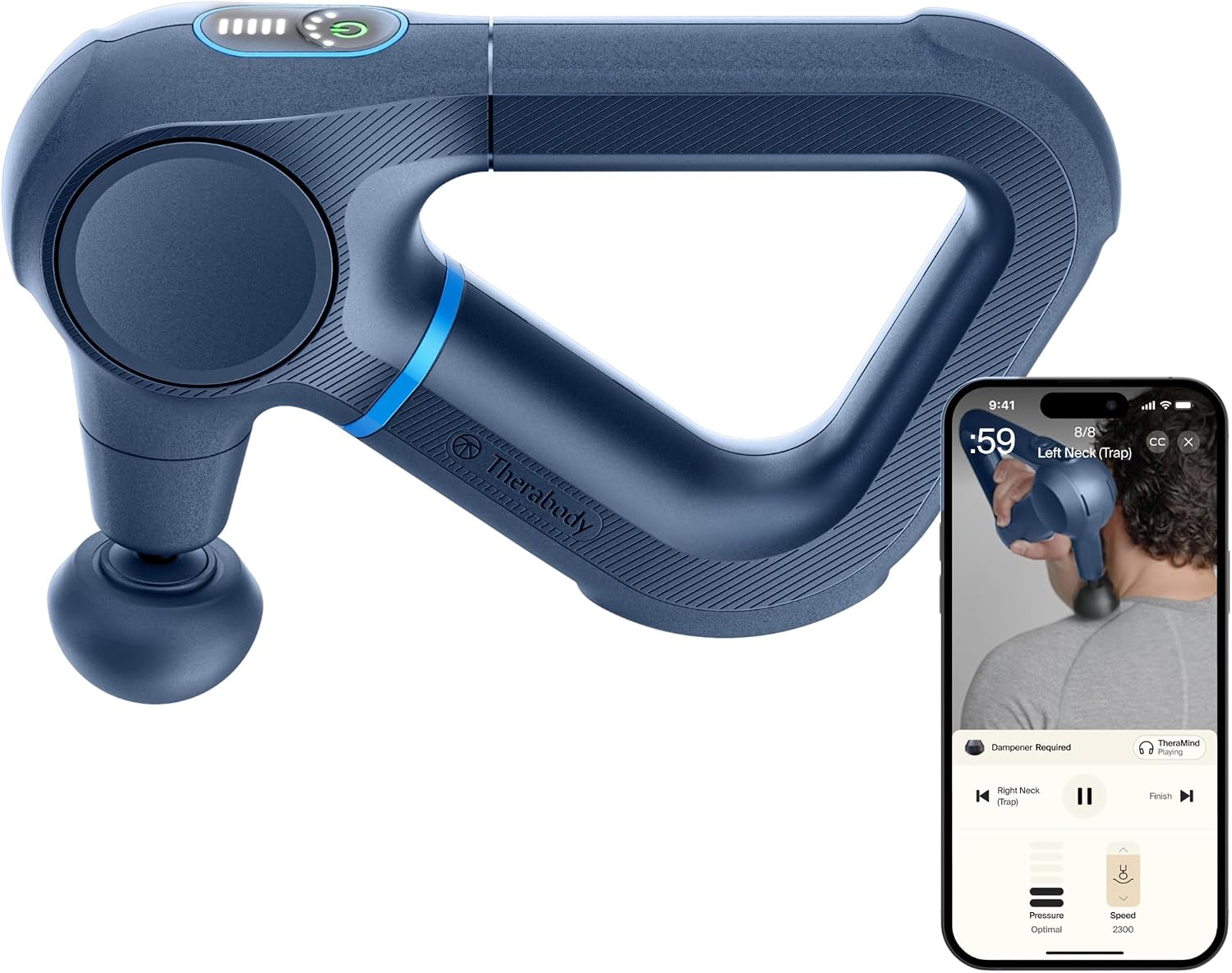 Visit on Amazon → TheraGun Therabody Prime 6th Gen |
Deep tissue percussion gun | Big muscle groups, heavy training blocks | Check current Amazon price |
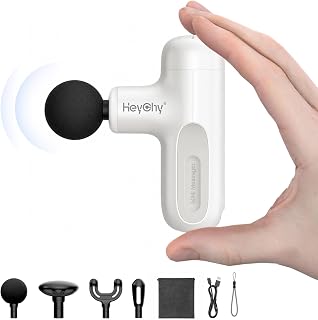 Visit on Amazon → HEYCHY Super Mini Massage Gun |
Compact percussion gun | Travel, forearms, calves, race day warmup | Check current Amazon price |
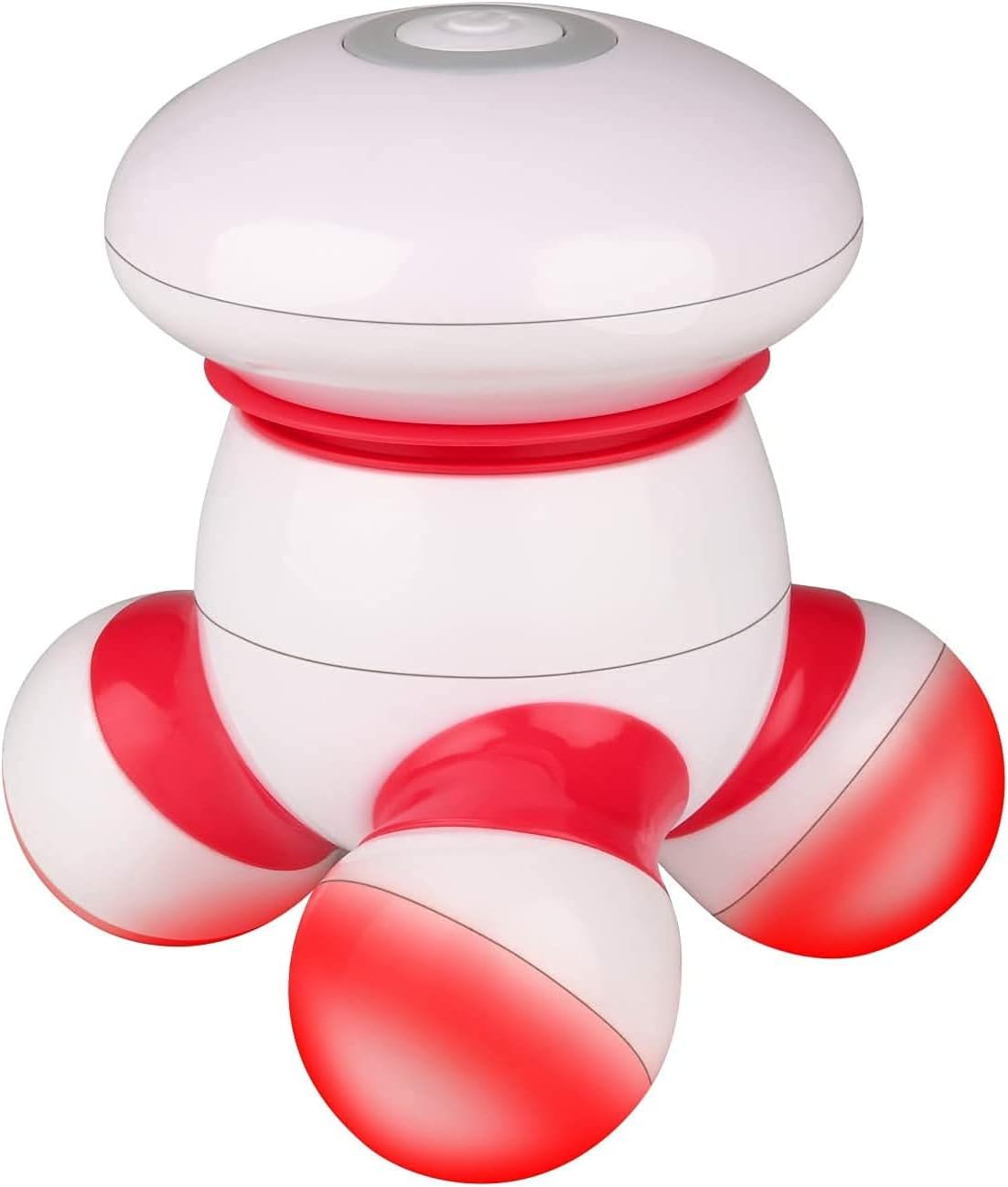 Visit on Amazon → cotsoco Handheld Massager Mini |
Battery operated vibrating massager | Neck, hands, feet, anyone who dislikes percussion | Check current Amazon price |
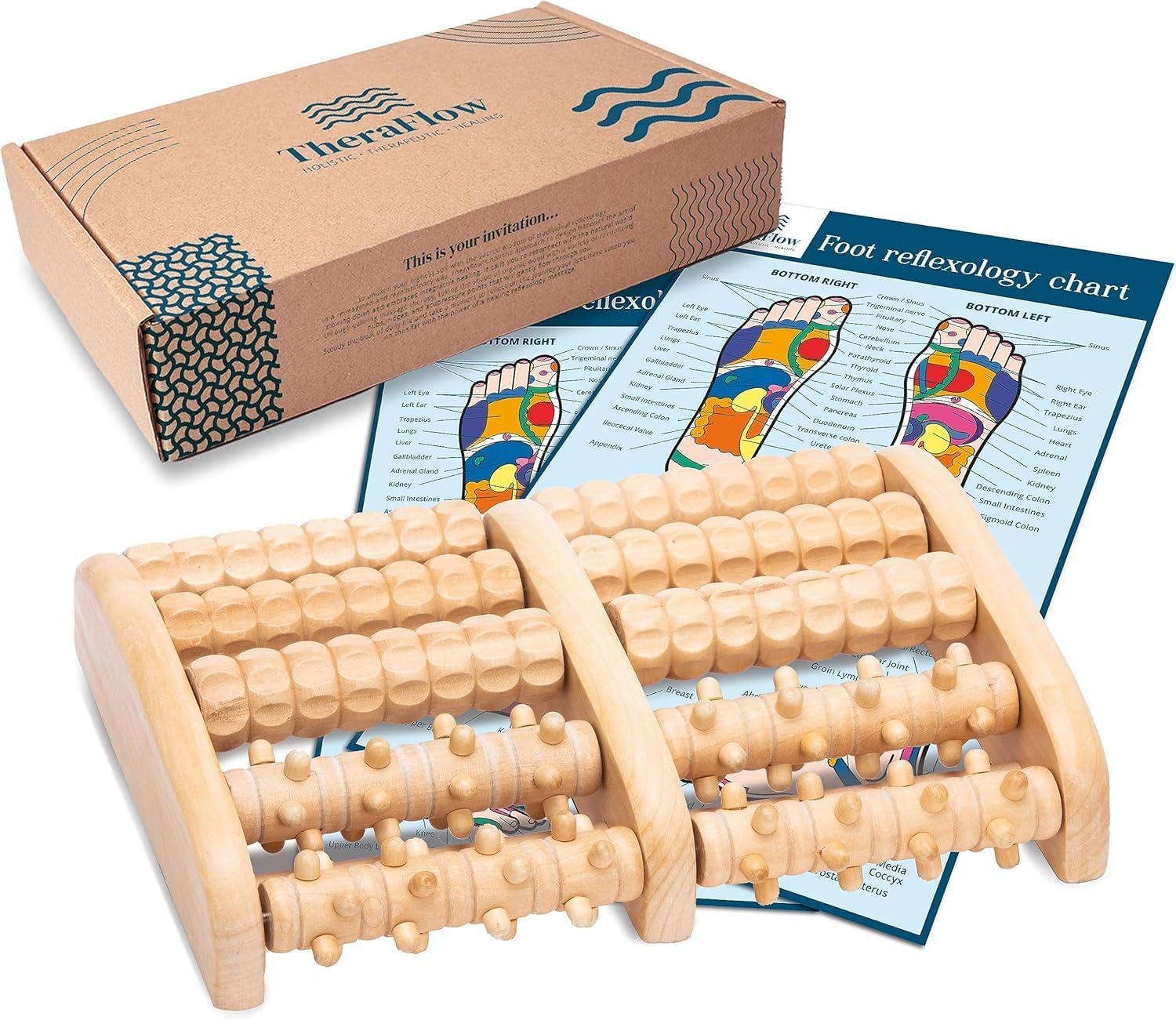 Visit on Amazon → TheraFlow Foot Massager |
Wooden foot roller with reflexology nubs | Feet, arches, post-ride loosening | Check current Amazon price |
The pattern in that table is simple. One gun for depth, one for portability, one for people who do not want percussion at all, and one that needs no power. That covers almost every recovery session I have ever needed, on the trail or in the living room.
Should you buy the TheraGun Therabody Prime 6th Gen?
If you train hard and want one gun that covers big muscle groups, yes. This is the flagship tier, and the flagship tier exists because holding a stroke under pressure is expensive to build. What you are paying for is depth and load tolerance, not a brand badge.
If your routine is ten minutes on your neck after a desk day, you are buying capability you will never use, and a mini gun will serve you better.
Should you buy the HEYCHY Super Mini Massage Gun?
Yes, as a second gun or a travel gun. It fits in a jersey pocket, it handles forearms, calves, and neck, and it is the one I take on weekend trips. What it will not do is hold deep tissue work on a loaded quad. Small motors give up first under pressure, and that is physics rather than a flaw in this particular gun.
Should you buy the cotsoco Handheld Massager Mini?
Yes, if percussion is too much for you. This is a vibrating massager, not a percussion gun, and it does a different job. Neck, hands, feet, between the shoulder blades. It is the tool I hand to people who tried a gun and hated the thump, and it is the one most likely to get used while watching television.
Should you buy the TheraFlow Foot Massager?
Yes, and for a lot of people it is the most useful thing on this list. Feet are bone and thin tissue, which makes a motorized gun easy to get wrong down there. A wooden roller puts you in control of the load because your own body weight does the work. Nothing to charge, nothing to break, and it is the easiest gift here.