I have been a physical therapy assistant at a sports rehab clinic in Denver for eight years, which means I have spent thousands of hours holding percussion tools against other people's hamstrings, and most of my weekends on an enduro bike in the Front Range. That combination makes me a hard audience for recovery gear marketing. When I sit down to write a massage gun comparison, I am not sorting by colorway or app features. I am asking one question: which of these tools gets picked up on a Tuesday night when your quads are cooked and you have to be back on the trail Saturday?
I have owned more than twenty guns and kept a spreadsheet on every one of them, tracking stall force, stroke length, noise at each speed, and battery life under real use. The four below cover the jobs people actually have: travel, deep tissue work at home, light daily use, and attachment variety. None of them treat an injury. All of them can help you recover and warm up, which is the whole point of owning one.
For most people, the Mebak 3 is the sensible pick because it is built and positioned for deep tissue work without a brand tax, while the TheraGun Mini 3rd Gen is worth its premium only if the gun has to leave your house.
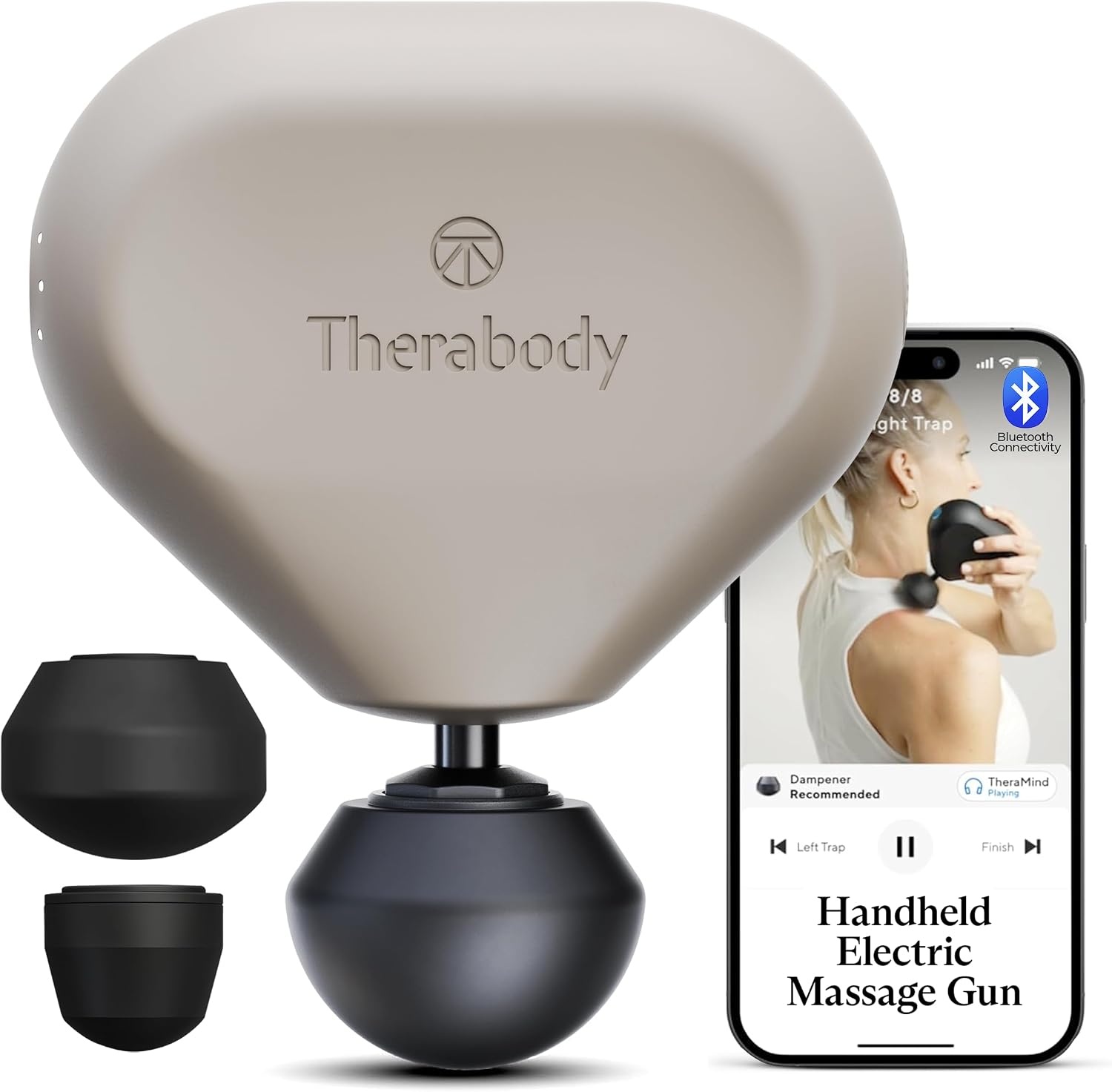
TheraGun Therabody Mini 3rd Gen Massage Gun, Travel Essential, Oat
The only one here that genuinely disappears into a jersey pocket or a carry-on, with the quiet, polished feel the brand is known for
Small body means a shorter stroke than the full-size guns, and you pay a premium for the format
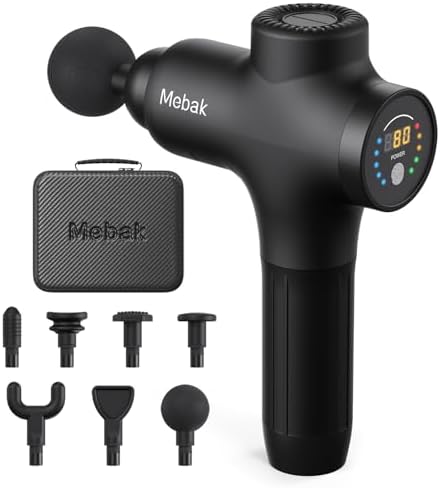
Mebak 3 Massage Gun Deep Tissue, Muscle Massager for Athletes
Aimed squarely at deep tissue work, with the attachment set and grip to handle real pressure on big muscle groups
The listing leans on pain relief language that no percussion tool can honestly deliver
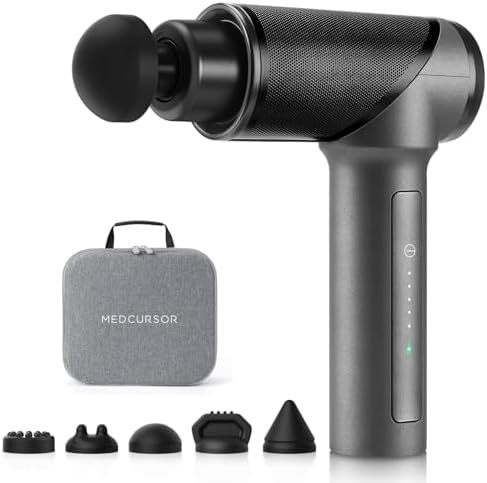
Medcursor Massage Gun, High Intensity Brushless Motor, 6 Massage Heads (Gray)
A friendly entry point with six heads and a brushless motor claim, and a neutral gray shell that works as a gift
Budget-tier motors are where stall force gives up first, so it is a light-use tool, not a press-hard tool
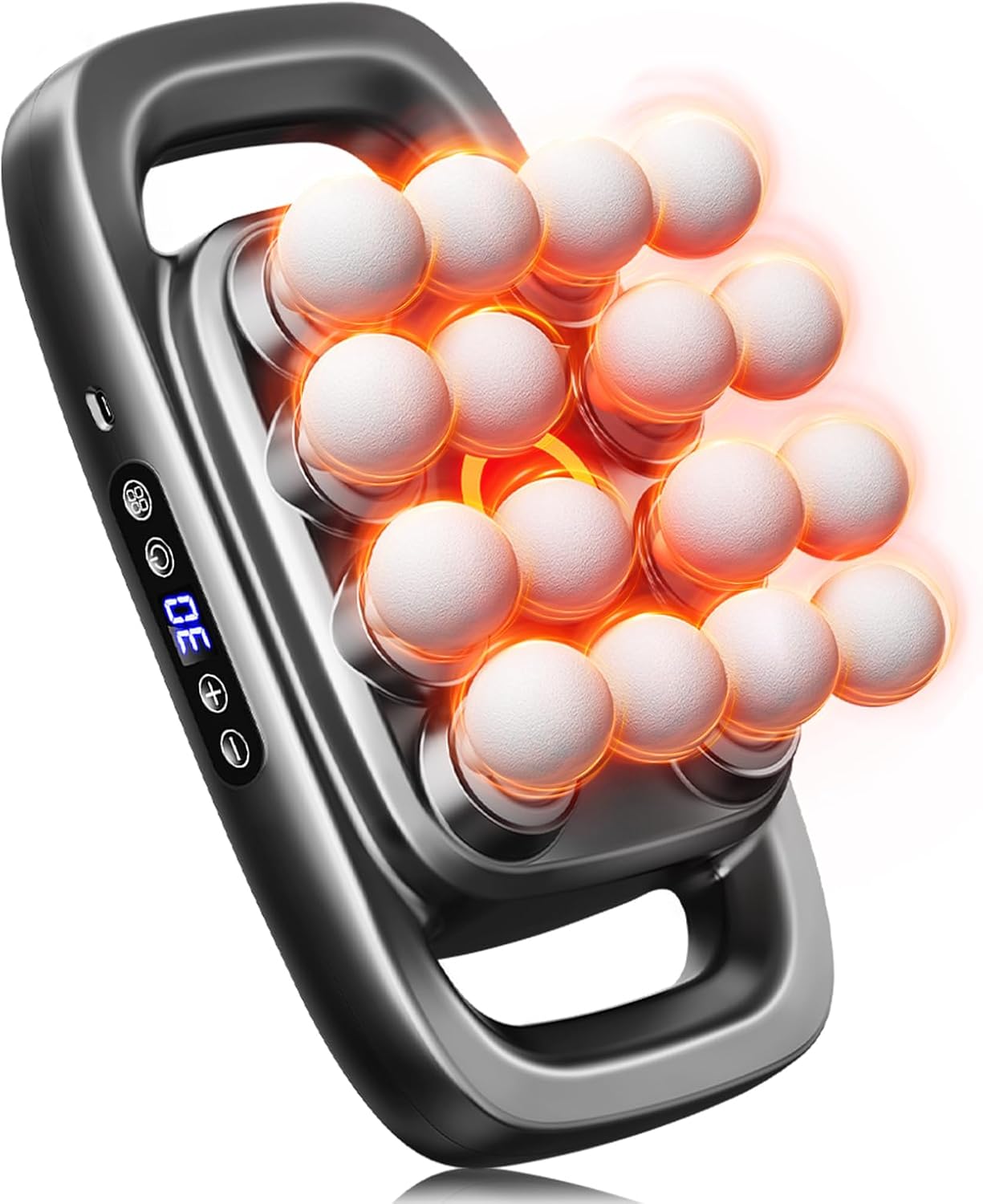
16-Head Massage Gun Set for Deep Tissue Massage, 3 Modes
Sixteen attachments and three modes cover every muscle group in the house and then some
Most people settle on two or three heads, which leaves a lot of case clutter and a lot to lose
Prices and availability were captured from Amazon Creators API and may change.
What separates a massage gun from a buzzer
Two specs do the real work, and neither one is printed in large type on the box.
Amplitude is the stroke length in millimeters, the distance the head travels on every thump. A 10mm gun is a surface tingle. It feels pleasant and it does very little for a dense quad. Fourteen to sixteen millimeters is where percussive therapy starts reaching tissue that is actually tight, which is why the full-size guns keep winning on big muscle groups and the minis keep losing.
Stall force is the second spec, and it is the one nobody advertises. It is how much pressure the motor absorbs before the stroke stops moving. Press a weak gun into a glute and you can hear the motor surrender, at which point you are holding a vibrating paperweight. I have watched that happen mid-session on a patient's hamstring, and I have watched a rider spend four hundred dollars on a gun that rattled his hand numb at the speed he needed. Both failures are predictable from the spec sheet, if the spec sheet exists.
RPM is the number brands print biggest, and on its own it means almost nothing. A fast cycle with a short stroke is just a faster tingle. If a listing will not tell you amplitude and stall force, treat the rest of the copy as decoration.
The four guns and the job each one does
Matching the tool to the job matters more than hunting for the single best motor. These four are built for four different people.
TheraGun Therabody Mini 3rd Gen: the one that travels
The Mini is the gun I recommend to people who ride, fly, or work out of a bag. Its entire reason for existing is the format. It is small enough to vanish into a jersey pocket or a carry-on, and the oat finish does not scream gym equipment on a hotel desk. If your recovery routine happens at home, in one spot, next to a foam roller, you are paying for portability you will never use.
The trade-off is honest and unavoidable. A compact body means a shorter stroke than the full-size guns here, and the price reflects the brand plus the engineering that shrank the tool, not raw output. For a weekend trip or a race morning, that is a fair trade. For a 30-mile Saturday, it is a warmup and travel companion, not the gun you reach for on a heavy leg day.
Mebak 3: the deep tissue all-rounder
The Mebak 3 is aimed at athletes and at deep tissue work, and that is exactly the lane where amplitude and stall force decide whether a gun is useful. This is the one in the group I would hand to someone with big quads, a stiff back after a long drive, or a training week that has stacked up.
One caveat, and it is the same caveat I give every patient: a massage gun is a recovery and warmup tool, not a treatment device. The listing's pain relief language is marketing. What the gun actually does is move blood through a muscle belly and help you feel looser, which is a real benefit and a different claim. Stay on muscle bellies, keep it off bone, joints, and the spine, and it does its job well.
Medcursor: light daily use and the gift aisle
The Medcursor is the budget entry here, and it is honest about what it is: a brushless motor, six heads, and a gray shell that reads as a gift rather than a piece of gym equipment. If your routine is fifteen minutes on the couch after a run, and you want something that will not break the bank to find out whether you even like percussive therapy, this is a reasonable first gun.
The catch is the category, not the brand. Budget motors are where stall force collapses first. A brushless motor claim tells you the motor will last, not that it has headroom when you lean into a calf. Use this one for light daily maintenance, travel backup, or a gift for someone who is not going to press hard. If you want to dig into a knot, spend your money on amplitude instead.
16-Head Massage Gun Set: the attachment maximalist
Sixteen heads and three modes is a lot of tool for the money, and the variety is not pure gimmick. A fork head around the erector muscles beside the spine, a flat head on the quads, a bullet head for a stubborn spot in the glute: those shapes matter, and having them in one case is genuinely convenient.
The honest math is that most people settle on two or three heads and the rest live in the box forever. If you like options and you want one purchase to cover every muscle group in a household, this is the pick. If you want a clean drawer and a simple routine, sixteen heads is sixteen things to lose.
The trade-offs nobody puts on the box
Brand tax versus motor. A premium price buys you design, support, and sometimes genuinely better engineering. It does not automatically buy you a deeper stroke. Check the amplitude before you check the logo.
Attachment count versus attachment quality. Sixteen heads sounds better than six until you realize you use two. Buy for the shapes you recognize, not the number in the title.
Small format versus stroke length. Every travel gun in this group pays for its size with a shorter stroke. That is physics, not a flaw, and it is fine as long as you know which job you are buying for.
Apps and subscriptions. Any feature that requires an account to unlock should be treated as a bonus, never as a reason to buy. If the app goes away, the gun should still work.
Battery claims. A lab-tested runtime at the lowest speed is not the number you will experience. Twenty minutes a day for a week is the real test, and it is the one I care about.
Noise, battery, and the paperweight problem
I will keep repeating this until brands start publishing it: noise is the spec that decides whether you actually use the gun. A tool that sounds like a router at the speed you need is a tool that stays in the drawer, no matter how good its motor is. When you evaluate any of these, think about where you will use it. A shared apartment, a hotel room, a 6 a.m. warmup before a race start: all of those places punish a loud gun.
Battery life matters in the same practical way. The question is not how long the gun runs in a lab. The question is whether it survives a week of short sessions without a charge, because a gun that lives on the charger is a gun you will forget to grab.
And the quiet one is not automatically the weak one. Some of the best tools I have handled are quiet because they are well built, not because they are underpowered. That is the whole point of looking past the box.
How to choose without overpaying
You do not need the most expensive gun in this comparison. You need the right one for your body and your week.
You travel, ride, or pack light: the TheraGun Mini 3rd Gen. You are buying the format, and for a weekend trip that is honestly all you need.
You train hard and want deep tissue work at home: the Mebak 3. Big muscle groups, real pressure, no brand tax.
You want a first gun or a gift: the Medcursor. Light daily use, six heads, a friendly entry point.
You want every attachment in one box: the 16-Head Massage Gun Set. Maximum variety, minimal drawer space left over.
Whichever you pick, the routine matters more than the tool. Five to ten minutes per muscle group, on muscle bellies only, before a hard effort or a few hours after one. The gun helps your body do the repairing. It does not do the repairing for you.
The short version
If you want one answer: the Mebak 3 covers the widest range of real recovery work for the money, and it is the one I would hand to most of the people who ask me what to buy. If your gun has to fit in a bag, the TheraGun Mini 3rd Gen is the one that will actually come with you, and that is worth more than a spec sheet nobody reads. The Medcursor is the low-risk way to find out whether you like percussive therapy at all, and the 16-Head Set is for the person who wants every attachment on day one.
Buy the one that matches your week. Then use it, because a massage gun that stays in the box is the most expensive paperweight in your house.