I have spent eight years as a physical therapy assistant at a sports rehab clinic in Denver, working with everyone from pro cyclists to weekend warriors coming back from a crash. I also ride enduro mountain bikes, which means a 30-mile Saturday turns into a Sunday spent negotiating with my own quads. So massage guns for recovery are not an abstract topic for me. I use them in the clinic under a PT's direction, and I use one on myself after long rides.
Here is the framing I give every patient: a massage gun is a recovery and warmup tool, not a treatment device. It does not fix anything. It helps blood move through a muscle belly so your body can do the fixing. That distinction changes what you should shop for. You are not looking for the biggest number printed on the box. You are looking for a gun you will actually pick up on a Sunday morning when your legs are trashed.
The short version: the cotsoco 20-Head Massage Gun Set is the most complete starter kit in this group, the Mebak 3 is the one aimed squarely at athletes and deep tissue work, the Medcursor is a clean brushless entry point with six useful heads, and the Sharper Image Powerboost Move is the travel pick with heat and cold heads built in.
Related: How to Use a Massage Gun Without Bruising Yourself
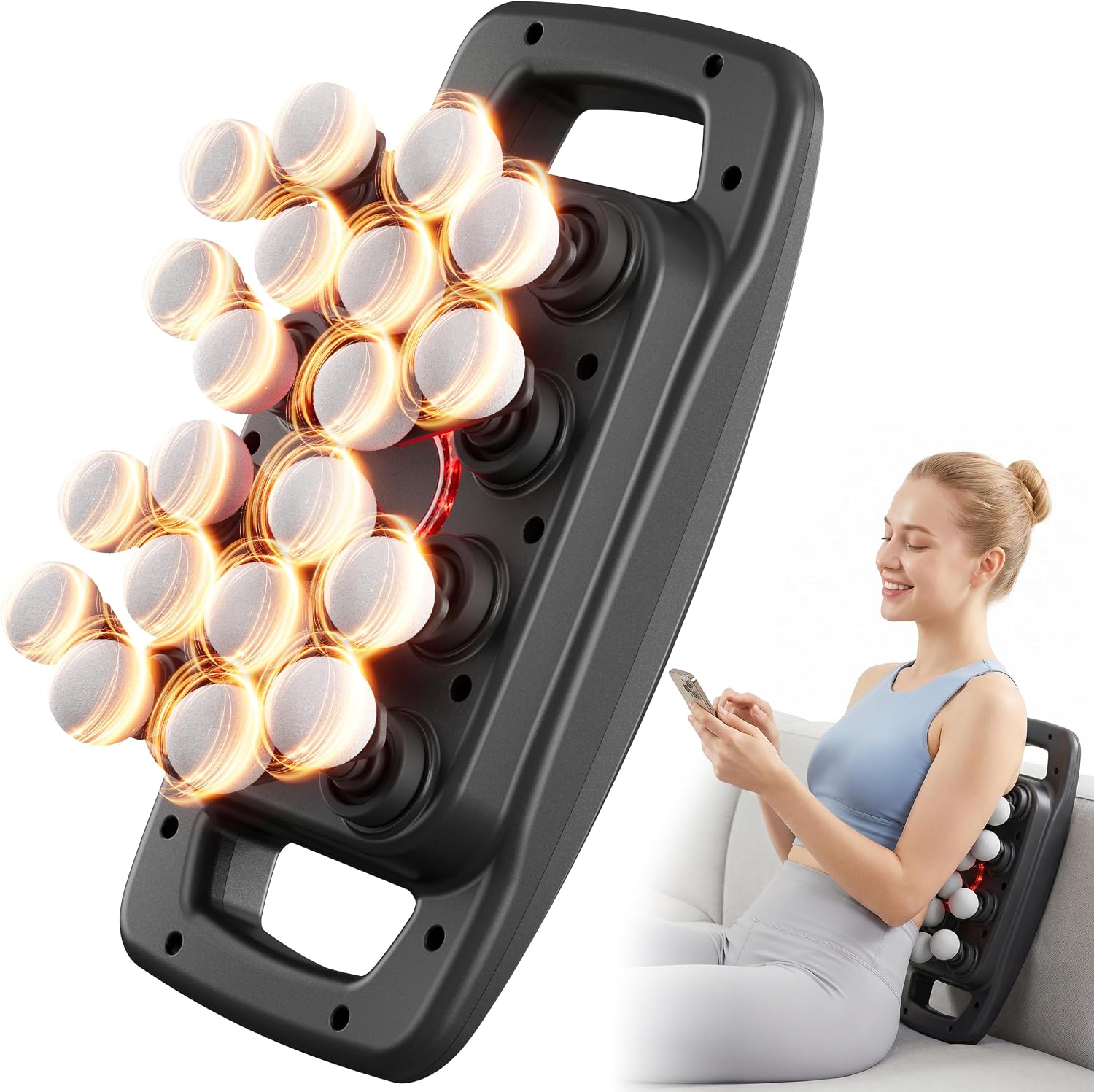
cotsoco 20-Head Massage Gun Set
Nine modes, nine intensities, and 20 heads cover feet, shoulders, back, and legs without buying a single add-on
Twenty heads is more clutter than most people will ever use, and the deep tissue claim needs a stall force number behind it
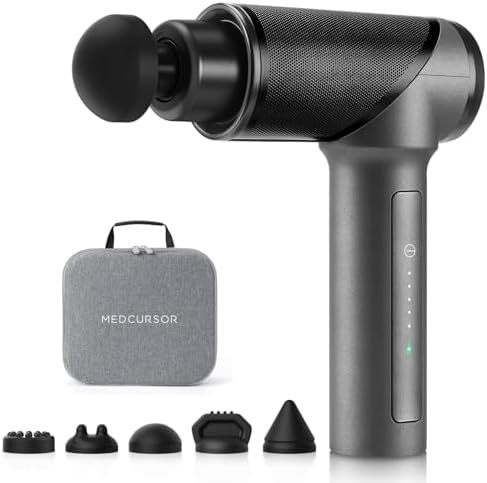
Medcursor Massage Gun
A brushless motor and six practical heads in a simple package, which is exactly what a first recovery gun should be
Nothing about it is specialized for leaning into big quads or a stiff low back
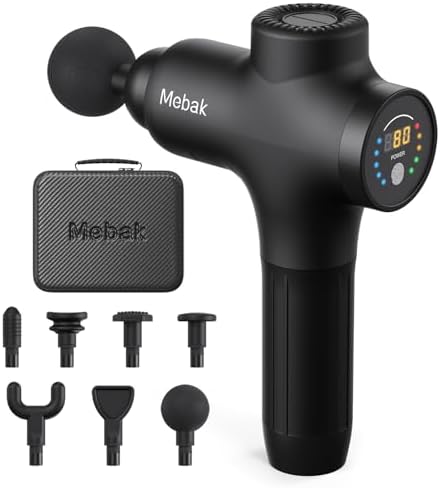
Mebak 3 Massage Gun
Built and positioned for athletes doing deep tissue work, which is the job that matters for lifters, riders, and runners
The spec sheet is thinner than the athlete positioning implies, so ask for amplitude and stall force before you commit
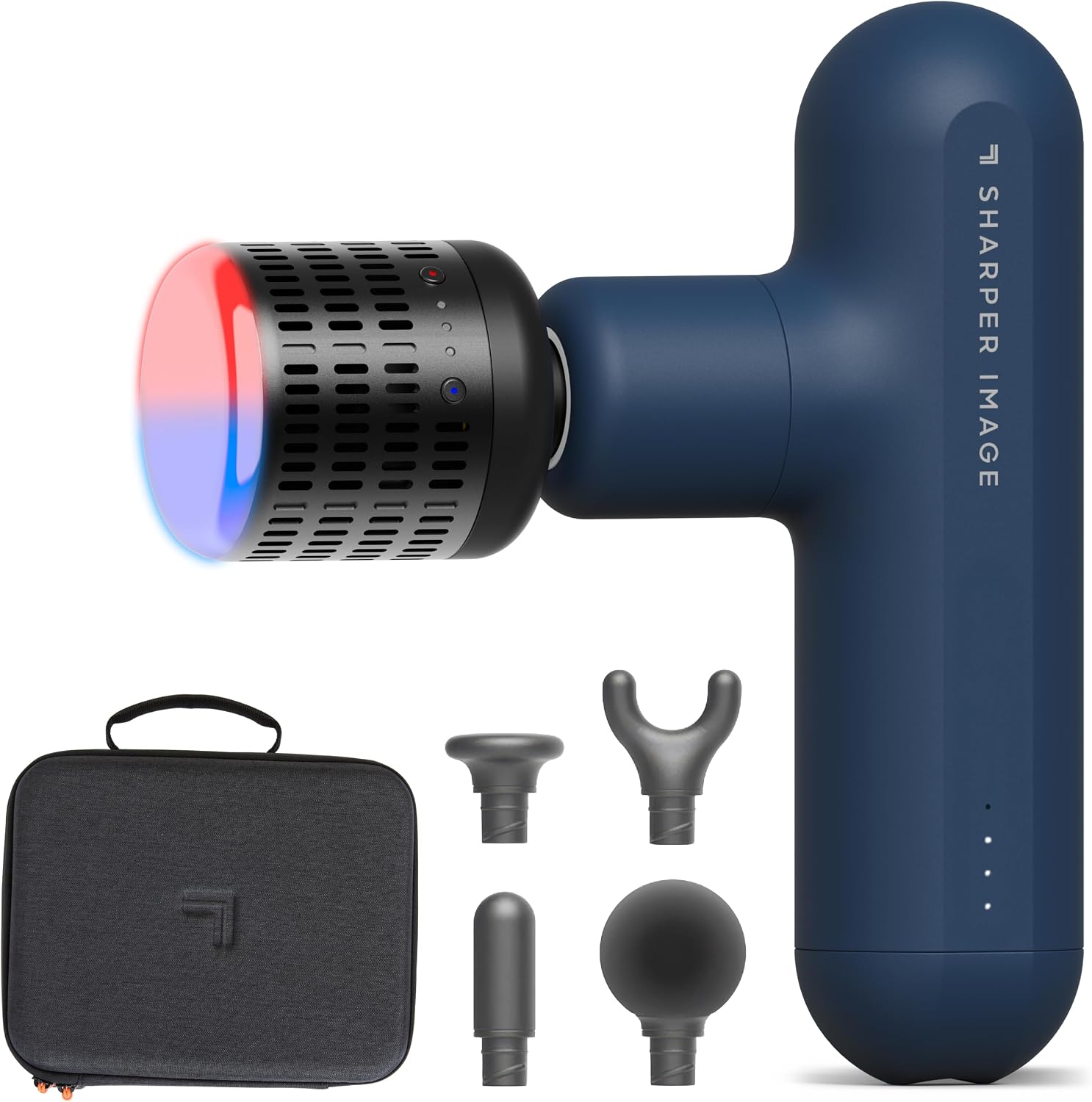
Sharper Image Powerboost Move Heat & Cold Mini Percussion Massage Gun
A mini body plus heat and cold heads makes it the one of the four that is easiest to actually carry and use every day
Small and travel-focused means it is a warmup and top-up tool, not a deep tissue workhorse for a 200-pound rider
Prices and availability were captured from Amazon Creators API and may change.
How I judge a massage gun for recovery
Four things decide whether a gun earns a spot in my bag. None of them is RPM, which is the number brands print biggest and the number that tells you the least.
Stall force is how much pressure the motor can absorb before the stroke stops moving. This is the spec that separates a massage gun from a buzzer. A gun with a high stall force keeps thumping when you lean your body weight into it, which is what you do on a hamstring or a quad. A gun with a low stall force turns into a vibrating brick the second you press down. You cannot recover a muscle with a brick.
Amplitude is stroke length in millimeters, meaning how far the head travels in and out. Around 10mm is a light, surface-level thump. Deep tissue territory starts nearer 14mm to 16mm. Amplitude is what you feel as depth, and it is why two guns with identical RPM numbers can feel completely different.
Noise at the speeds people actually use matters more than peak power for most buyers. A gun that is too loud to use on the couch while your partner watches TV is a paperweight, no matter how strong it is. The honest test is not the quietest setting. It is the middle setting, which is where nearly everyone lives.
Battery behavior under real use is the fourth. A lab figure means little. What I want to know is whether the gun survives a week of 20-minute sessions without a charge, because that is how a recovery tool actually gets used.
The four guns, and who each one is for
cotsoco 20-Head Massage Gun Set
This is the most complete kit of the group on paper. Twenty heads, nine modes, and nine intensities means you can cover feet, calves, shoulders, and back without buying anything extra, and the wide attachment selection is genuinely useful if more than one person in the house is going to use it. The foot and flat heads are the two that get the most use in my experience, and having a set means nobody is fighting over the same attachment.
The trade-off is focus. Most people settle into two or three heads within a month, and the rest live in a drawer. The bigger question with any gun marketed as deep tissue is whether the motor holds when you press. That is the number I want to see published, and it is the number budget listings tend to leave out. If you want one kit that covers the whole family, this is the one to look at.
Medcursor Massage Gun
The brushless motor is the detail that matters here. Brushless motors run more efficiently and generally quieter than the cheap brushed motors in no-name guns, and they tend to last longer, which is the difference between a tool you keep for years and one that dies in a season. Six heads is a sensible, uncluttered set: enough variety to work a calf, a shoulder, and a low back without a drawer full of duplicates.
What you are not getting is specialization. This is a general-purpose recovery gun, and that is fine. It is the pick for someone who wants one device for post-ride legs and a stiff neck, not someone chasing maximum depth on a heavy lifter's quads.
Mebak 3 Massage Gun
The Mebak 3 is the one in this group that is explicitly built for athletes and deep tissue work, and that positioning matters. The people who get the most out of a gun are the ones with a lot of muscle to move through: cyclists with dense quads, lifters with big traps and lats, runners with chronically tight calves. Those are also the people who press hardest, which is exactly when a weak motor stalls.
My caution is the same one I apply to every athlete-marketed gun. "Deep tissue" is a marketing phrase until the brand publishes amplitude and stall force. If those numbers are not on the page, ask before you buy, because an athlete's recovery gun that stalls under pressure is a waste of money at any price.
Sharper Image Powerboost Move Heat & Cold Mini Percussion Massage Gun
This is the travel gun, and the heat and cold heads are what set it apart from the other three. A mini format is not a compromise for everyone. For a weekend trip or a race day, a gun that fits in a bag and comes out on the start line is worth more than a full-size unit sitting in the garage. Heat on a stiff calf before a cold morning ride is a genuinely nice thing to have, and the cold head is a comfort feature I would treat as a bonus rather than a reason to buy.
The honest limitation is depth. Mini guns trade stroke and mass for portability, so this is a warmup and top-up tool. It is not the gun you reach for when you need to work through a dense quad after a long day. If portability is your priority, it wins this group. If depth is your priority, it does not.
Heat and cold on a percussion gun: what they are actually for
Heat and cold heads are the newest feature push in this category, and I want to be careful about what they do and do not do.
A heated head feels good on a stiff, cold muscle before activity. That is a comfort and warmup benefit, and for a 6 a.m. ride in Colorado it is a real one. The cold side is more of a novelty in my book. If you want cold after a hard effort, a bag of frozen peas wrapped in a towel does the job, and I would not buy a gun for that feature alone.
What neither setting does is treat anything. They change how the head feels against your skin, not what the percussion is doing underneath. Judge the gun on its motor first, and treat heat and cold as the tiebreaker.
The trade-offs nobody puts on the box
Every gun in this comparison is sold as a deep tissue massager. Only some of them will hold up to that description in practice, and the box will not tell you which.
Here is what I would ask before buying any of the four. What is the amplitude in millimeters? What is the stall force? How loud is it on the middle setting? How long does the battery last at that setting? If a listing answers all four, you can buy with confidence. If it answers none and leans on RPM and mode counts, you are buying a guess.
The second trade-off is attachment count versus attachment use. Twenty heads sounds like more value than six. In practice, a foot head, a ball head, and a flat head do 90 percent of the work. Extra heads are not a bad thing, but they should not be the reason you pick one gun over another.
The third is size. A full-size gun has more mass behind the stroke, which is why it feels stronger, and it is also the reason it stays in the closet. A mini gets used. A gun that gets used beats a gun that does not, every single time. That is not a spec, but it is the truest thing in this article.
What I tell patients and riding buddies
If you are new to percussive therapy, buy the gun that fits your routine, not the gun with the biggest number on the box. The cotsoco set is the broadest kit and the easiest one to share. The Medcursor is the straightforward brushless option for general recovery work. The Mebak 3 is the athlete-oriented pick if deep tissue is your goal. The Sharper Image Powerboost Move is the one that goes in the bag.
Whoever you pick, use it on muscle bellies only. Never on bone, joints, or the spine. That is not a disclaimer, that is anatomy. Keep the pressure moderate, move the head slowly across the muscle, and give each area 30 to 60 seconds rather than parking on one spot. Recovery is a skill. The gun is just the tool.
What I am testing next
I am partway through a full Colorado riding season with a batch of 2026 guns, logging how each one behaves over three months of real use rather than a single afternoon on the couch. The pattern I keep finding is that the price tag predicts the marketing budget, not the motor. Some of the least expensive guns in this group are the ones I reach for after a long ride, and some of the most expensive ones rattle my hand numb at the top speed.
When that logbook is done, I will have numbers instead of adjectives for amplitude, stall force, noise, and battery. Until then, the four guns above are a solid starting point, and the four questions in this article are the ones worth asking before you spend anything.