I've spent eight years as a physical therapy assistant at a sports rehab clinic in Denver, and six of those years riding enduro mountain bikes on the Front Range. That combination means I've watched a lot of massage guns get used on real muscle: hamstrings coming back from a crash, quads the morning after a 30-mile day, shoulders that spent too long in one position. I've also watched a budget gun stall out mid-session and a premium gun rattle a rider's hand numb at full speed.
So when someone asks me about massage guns for muscle recovery, I don't start with the biggest number printed on the box. RPM is marketing. Stall force, amplitude, and noise at the speed you'll actually use are the specs that decide whether a gun earns a spot on your shelf or becomes a paperweight.
Short answer: for conventional percussive recovery, the Hyperice Hypervolt Go 2 and the Turonic Professional are the two I'd point most people toward, while the TOLOCO is the one I'd hand to someone who isn't sure they'll stick with a recovery routine. The Prime mini orbital is a different tool entirely, and it's worth understanding why before you buy it.
TOLOCO Massage Gun
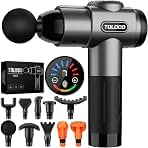
Lowest barrier to entry of the four, ships with a large set of interchangeable heads, and the listing advertises a brushless motor built for quiet running
Budget-class percussion guns are exactly where I see the widest gap between marketing copy and how the motor holds up under load
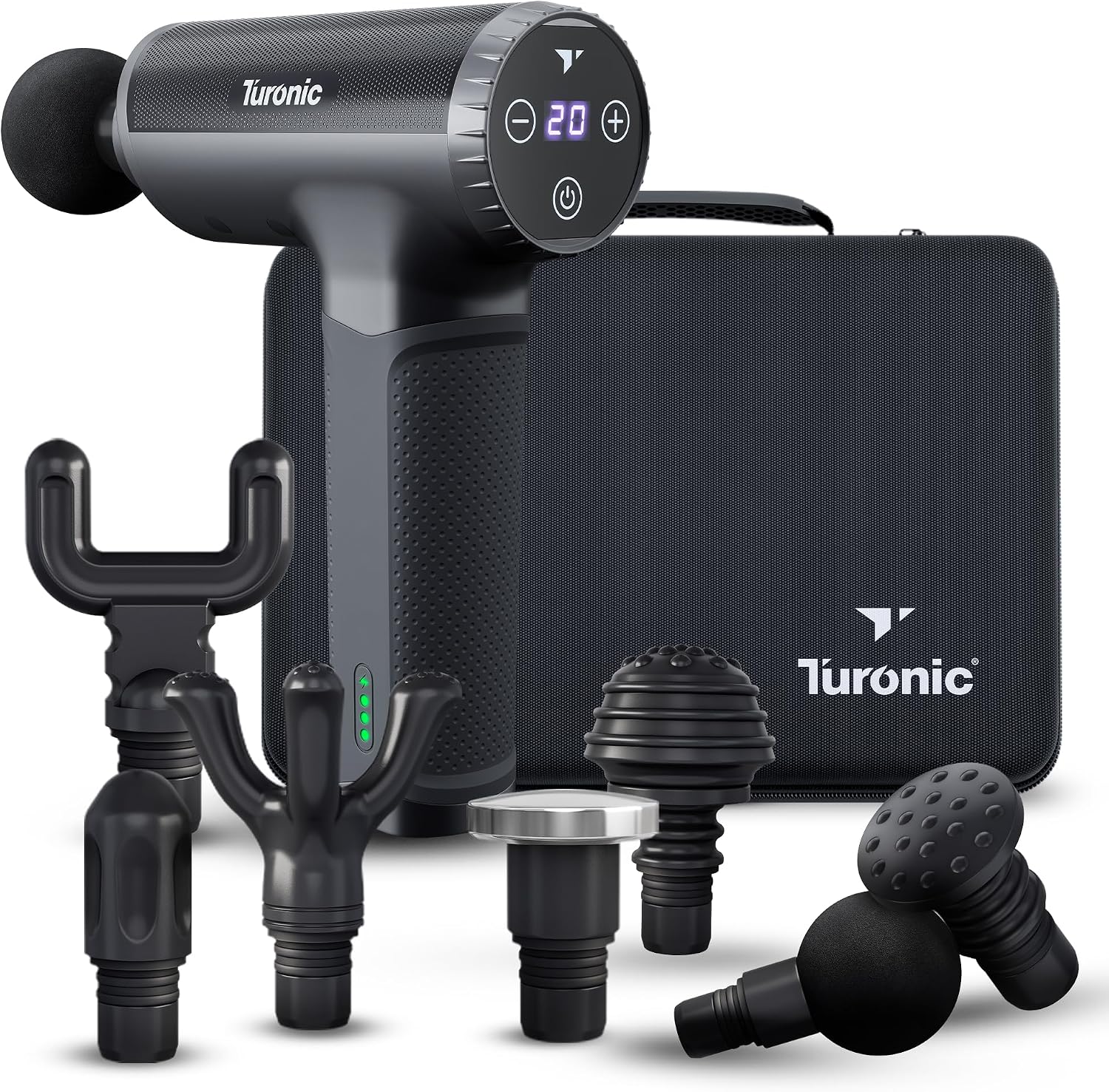
Turonic Professional Handheld Massage Gun
Deep tissue percussion is the entire design brief here, not an afterthought bolted onto a generic handheld
It sits at the top of this group on cost, so it has to justify itself against guns that cost meaningfully less
Hyperice Hypervolt Go 2
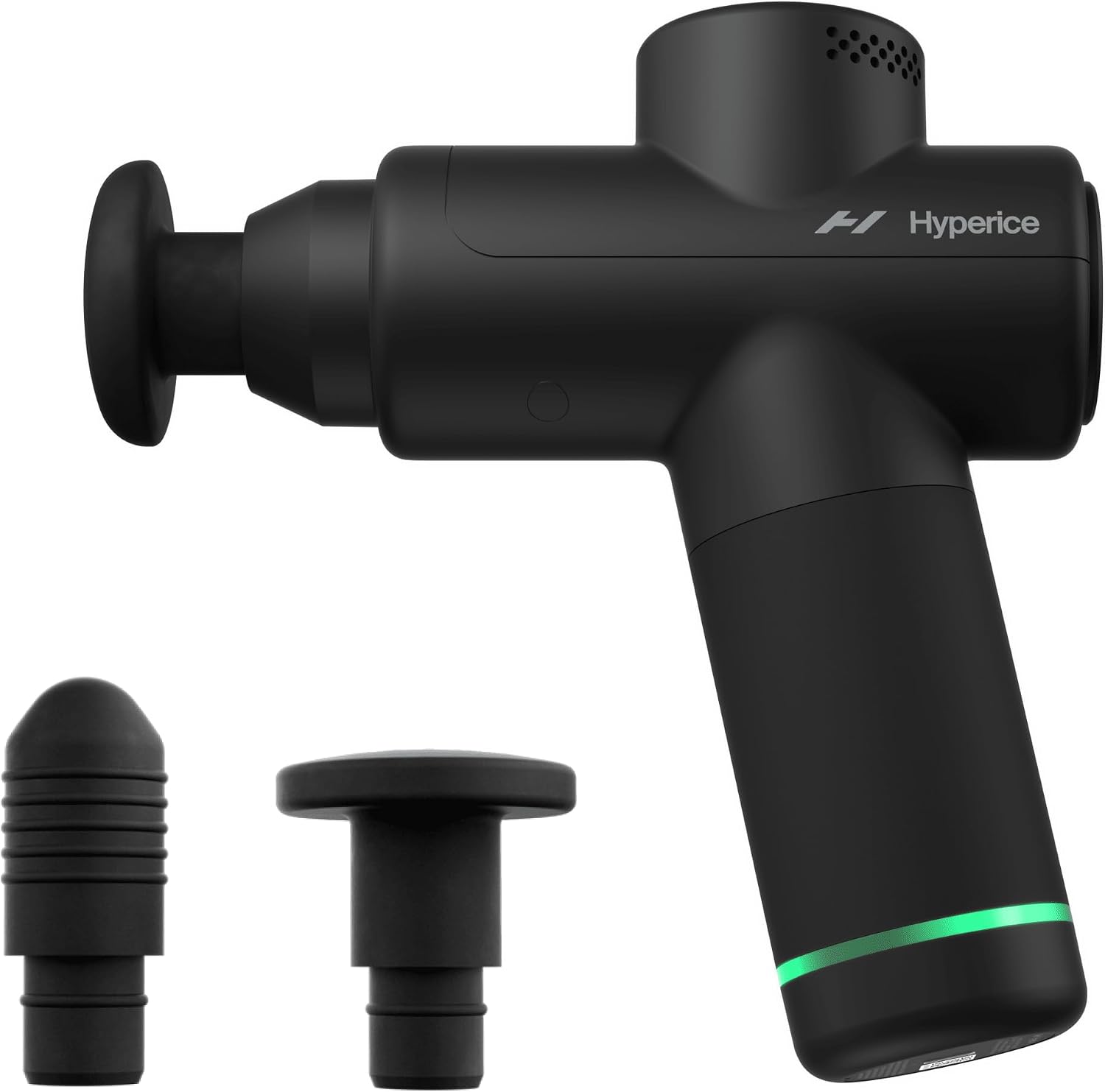
Compact body from the most recognized name in percussion therapy, easy to keep in a gym bag or a trail bag
Compact guns trade depth for portability, and part of what you pay covers the badge on the side
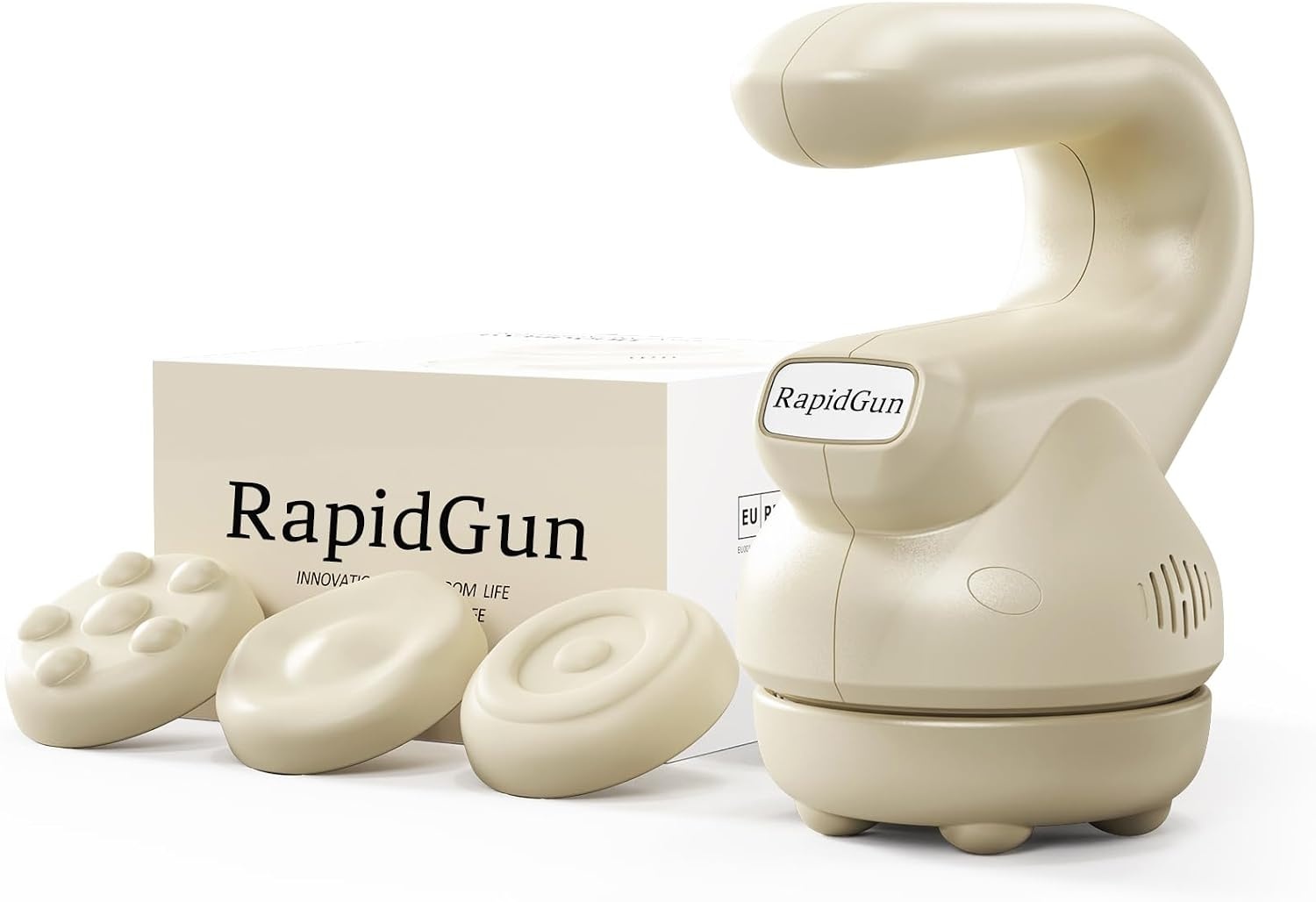
Prime Handheld Mini Orbital Therapy Massager
Rotating and vibrating action gets into trigger points that a straight percussive head can slide right past
It isn't percussive, so it will not feel like a massage gun if percussive thump is what you came for
Prices and availability were captured from Amazon Creators API and may change.
What I look at before anything else
Four things, in this order.
Stall force is first. That's how much pressure the motor takes before the stroke stops moving. It's the single spec that separates a massage gun from a buzzer, and it's the one most listings leave off entirely. A gun with impressive RPM numbers and a soft motor will feel fine on a calf and useless on a loaded quad, because the moment you lean in, the stroke dies and you're holding a vibrating plastic shell.
Amplitude is second. That's stroke length in millimeters, how far the head travels each cycle. Short strokes stay in the surface layers of a muscle belly. Longer strokes get into the tissue that actually holds tension after hard efforts.
Noise is third, and battery is fourth. Both are things you only learn by living with a gun, which is why the pattern in the table above matters more than any single line in it.
The four guns, one at a time
TOLOCO Massage Gun
This is the entry point of the group, and the listing is honest about what it's selling: ten interchangeable heads, a brushless motor pitched as quiet, and a gray body that won't look out of place in a gym bag. For someone who has never used a percussion gun and wants to find out whether they'll actually keep up with recovery work, that head selection is a real advantage. Different heads change how the same motor feels on a calf versus a shoulder blade, and having ten of them means you can experiment instead of guessing.
The honest caveat is the one I apply to every gun in this price class. Budget percussion tools are where I see the widest spread between the spec sheet and reality under load, so the thing I'd want to confirm is how the stroke behaves when you press in, not how it feels when you hover.
Turonic Professional Handheld Massage Gun
The Turonic is the most expensive of the four, and the design brief is narrow: deep tissue percussion, full stop. There's no rotating head, no gimmick mode, no attempt to be three tools at once. If you're the kind of person who reads a spec sheet and wants the gun aimed at dense muscle, this is the one in the group built around that idea.
What I'd want before recommending it to a patient is the same thing I'd want from any gun at this tier: the stall force curve and the noise at the middle speeds, where most people actually spend their sessions. A deep tissue gun that's unpleasant to hold at the setting you need is a deep tissue gun that stays in the case.
Hyperice Hypervolt Go 2
Hyperice is the name most people already know, and the Go 2 is the compact member of that family. Compact matters more than people expect. A gun you can drop in a gym bag or a hydration pack gets used. A gun that lives in a drawer because it's a hassle to carry does not, no matter how good its motor is.
The trade-off is the trade-off every compact gun makes. Smaller bodies generally give up depth to get small, so if your recovery work is mostly big muscle groups after long rides, you're paying for portability and brand recognition as much as for output. For travel, small hands, and people who want a known quantity, that's a fair trade.
Prime Handheld Mini Orbital Therapy Massager
This one is the outlier, and I want to be direct about it: it's not a percussion gun. The head rotates and vibrates rather than hammering straight in, and it's built around trigger point work and portable use. That's a genuinely different sensation, and for some jobs it's better. A rotating head can work across a knot instead of bouncing off it, and the multi-speed control lets you dial down to something a percussion gun can't really do.
Where it loses is the obvious place. If what you want after a long ride is the deep, thumping percussive feel that loosens a whole quad, this is not that tool. It's a complement, not a substitute.
Amplitude and stall force without the marketing
Amplitude is the number I care about most after stall force, and it's the number brands love to bury. Ten millimeters is light work: warmups, arms, the smaller muscles around the shoulder. Around fourteen to sixteen millimeters is deep tissue territory, where the stroke is long enough to move through a big muscle belly instead of tapping the surface. Two guns with identical RPM figures can feel nothing alike if one is at 10mm and the other is at 15mm.
Stall force is the other half of the equation. Amplitude tells you how deep the stroke goes. Stall force tells you whether that stroke survives you leaning into a tight hamstring. A gun can have respectable amplitude and still fold the moment you apply pressure, and that's the failure mode I see most often in cheap units. Neither number is usually printed on the box, which is why I treat RPM claims as decoration until I know what's behind them.
Why noise matters more than RPM
Here's the thing nobody puts in a review: the best gun is the one you'll actually use. If a gun is loud enough that you won't run it while your partner is asleep, or loud enough that you feel awkward using it in a shared gym, it doesn't matter how good its motor is. It becomes a paperweight with a battery.
Noise is also the spec that gets tested in the least useful way. A manufacturer's lab number at the lowest speed tells you almost nothing. What matters is the volume at the middle and upper settings, which is where people actually spend their twenty minutes. This is why I want to see real-use reports rather than a spec sheet line, and why a gun with a brushless motor advertised as quiet is at least asking the right question.
What the table can't tell you
The table gives you the shape of each product: what it's built for, where it gives ground, and how the four compare at a glance. It can't tell you how a gun feels in your hand after ten minutes, whether the head swap is a two-second job or a wrestling match, or whether the battery holds up across a week of short sessions instead of one long one.
Two more things worth checking before you buy any of these. First, whether the controls and speed settings are reachable with one hand, because a gun you have to stop and fiddle with is a gun you stop using. Second, whether any feature you care about sits behind an app or a subscription. Basic speed control should never require a login, and I've watched that pattern creep into this category.
Who should buy which
If you're new to percussion guns and not sure you'll keep up with a routine, the TOLOCO is the low-risk starting point, and the head selection gives you room to figure out what you like.
If your recovery work is built around big, dense muscle groups after hard training, the Turonic is the one in this group designed for that job from the ground up.
If you want a gun that travels, lives in a bag, and carries a name most people recognize, the Hyperice Hypervolt Go 2 is the compact pick.
And if your problem areas are specific knots and trigger points rather than whole muscle bellies, the Prime mini orbital does something the other three don't.
What I tell people before they buy
A massage gun is a recovery and warmup tool, not a treatment device. It doesn't fix anything. It moves blood through a muscle belly so your body can do the fixing. That distinction matters, because it changes what you should expect and how you should use it.
Muscle bellies only. Never bone, never joints, never the spine. That's not a legal disclaimer, that's anatomy. If you have an actual injury, a massage gun is not the answer, and no listing on Amazon is going to tell you that. Talk to a professional, then use the gun as part of the plan they give you.
The bottom line
You don't need the most expensive gun in this comparison. You need the right amplitude and enough stall force for the muscles you're actually working, plus a noise level you can live with. Those three things predict whether a gun gets used far better than any RPM figure ever will. Match the tool to the job, keep your sessions short and consistent, and skip anything that makes a medical promise on the box.