I've worked as a physical therapy assistant at a sports rehab clinic in Denver for eight years, and in that time I've watched more people waste money on the wrong deep tissue massage gun than on any other piece of recovery gear. The pattern never changes. There's a big number on the box, a vague promise about "therapy-grade" percussion, and no published amplitude or stall force anywhere in the listing. Then the gun shows up, you lean into a tight quad, and the head stops moving. What you bought was a buzzer with a handle.
I test these things through a full Colorado riding season now, on my own legs after 30-mile enduro days and in the clinic with patients under the head PT's direction. I keep a spreadsheet on every gun I've owned, more than 20 of them at this point, and the columns I care about are stall force, amplitude, noise at the speeds people actually use, and whether the battery survives a week of normal sessions. That habit is why this comparison is four guns instead of fourteen.
Related: Massage Gun Amplitude Explained: Why Stroke Length Beats RPM
The best deep tissue massage gun for most people in this group is the Opove Apex, because it's the only one of the four that publishes an amplitude figure at all, 14.5mm, and amplitude is the spec that decides whether you're getting deep tissue work or surface vibration. The other three earn their place for specific jobs: the arboleaf Mini for a gym bag or a carry-on, the Medcursor as a first gun on a tight budget, and the 20-head model for someone who wants every attachment shape in a single box.
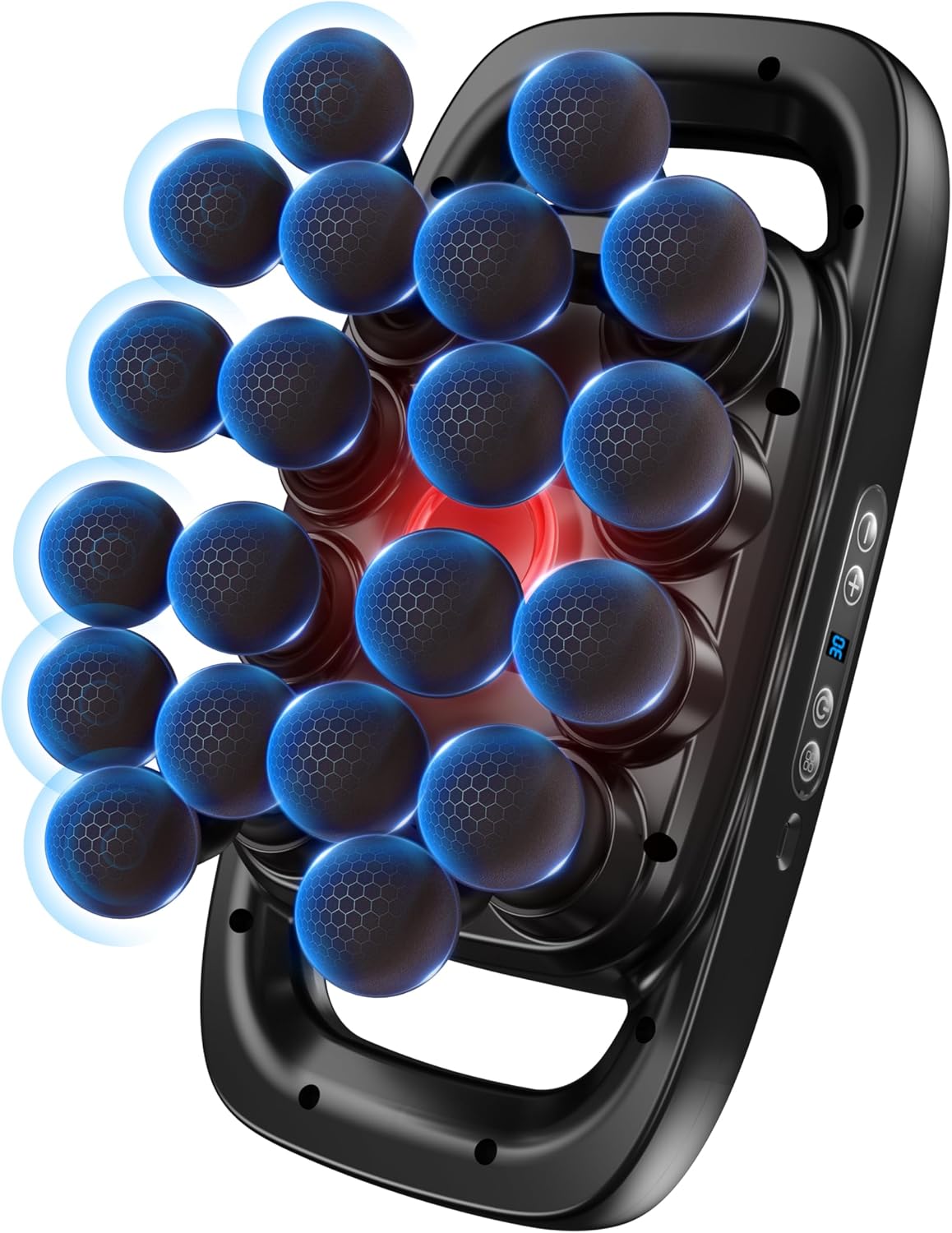
20-Head Massage Gun Deep Tissue Percussion Massager with 3 Modes
Widest attachment library here, 20 heads and 3 modes, so you can match the head to the muscle group
Head count is not depth. Twenty heads don't add a millimeter of amplitude, and it's a lot of pieces to keep track of
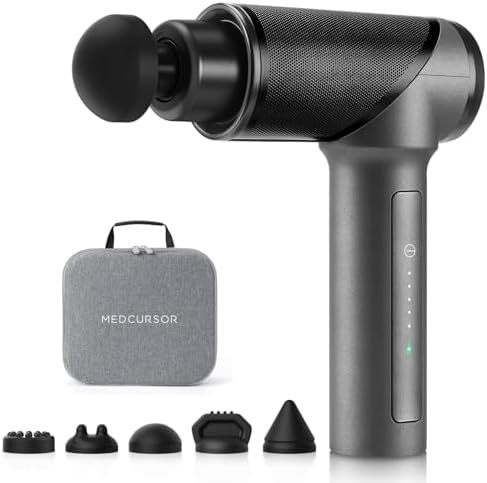
Medcursor Massage Gun, High Intensity Brushless Motor, 6 Massage Heads (Gray)
Brushless motor and 6 heads at the budget end of the group, the cheapest way into percussive therapy
Budget-tier build is exactly where stall force tends to collapse under real pressure, so test it before you trust it
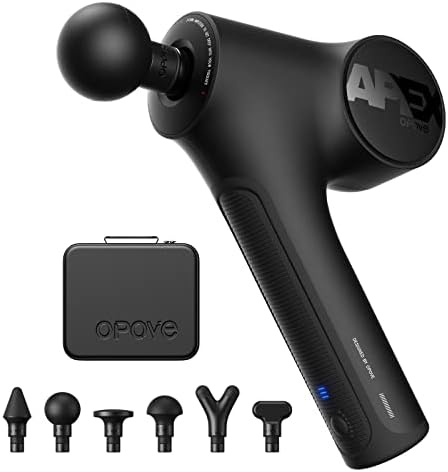
Opove Apex Massage Gun 14.5mm Deep Tissue, Black
The only gun in this comparison that names its amplitude, 14.5mm, which is genuine deep tissue territory
Not the pick if you want a big attachment library or a gun that disappears into a carry-on
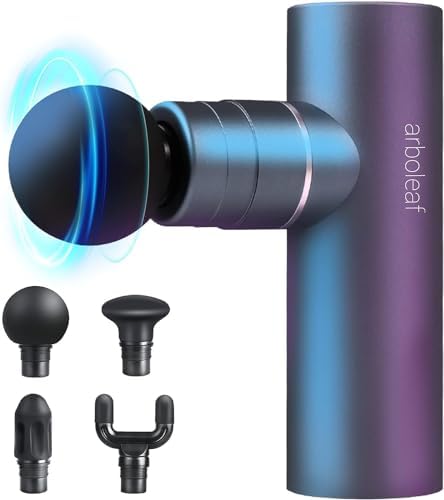
arboleaf Mini Massage Gun Deep Tissue, Portable Percussion Massager
Small, light, and the one you'll actually pack, which matters more than any spec sheet
Mini format means you trade mass and depth for portability. It's a warmup and travel tool, not a quad wrecker
Prices and availability were captured from Amazon Creators API and may change.
How I judge a massage gun
Four things, in this order.
First, stall force. I press the head into my own thigh and keep pressing. If the stroke keeps moving, the motor has something behind it. If the head stops and the handle just vibrates, the gun has told me everything I need to know, and no RPM figure on the box is going to change my mind.
Second, amplitude, which is stroke length in millimeters. This is how far the head travels in and out with each thump. Around 10mm is light, surface-level work. Around 14 to 16mm is where you start reaching actual muscle bellies on big groups like quads and glutes.
Third, noise at the speed people actually use, not the lowest setting the brand measured in a lab. If a gun is loud enough that you won't turn it on in an apartment at 9 p.m., it doesn't matter how good it is.
Fourth, battery under real use. A week of 20-minute sessions tells you more than a claim tested on a bench.
And then the only question that really matters: would I hand this to a patient who's coming back from a crash? That's the test.
Amplitude and stall force: the two specs that matter
If you take one thing from this comparison, take this. RPM is marketing. It's the number brands print biggest because it's the easiest one to inflate. Strokes per minute without amplitude behind it is a fast, shallow buzz that feels like something is happening without doing much of anything.
Amplitude is the depth. Stall force is the motor's willingness to keep delivering that depth when you lean in. You need both. A gun with 14mm of amplitude and a weak motor stalls the second you press it into a hamstring, and a gun with a monster motor and 8mm of amplitude just taps the surface faster.
This is why the Opove Apex stands out in this group. It's the one listing that names its stroke length, 14.5mm, and 14.5mm is squarely in deep tissue range. The other three either lead with head counts, modes, or portability, all of which are real features, but none of which tell you how deep the thump goes. When a brand won't publish amplitude, I assume it's because the number wouldn't help the sale.
Opove Apex: the deep tissue pick
The Apex is the gun here I'd point at a cyclist with locked-up quads or a lifter with a stubborn glute. At 14.5mm of amplitude, it has the stroke length to get below the surface layer, and the black finish is the least conspicuous of the four on a shelf or in a gym bag.
What it gives up is variety and size. There's no 20-head attachment library here and no mini form factor. It's a focused tool: one job, done at a depth the others don't advertise. If your recovery sessions are about big muscle groups after hard efforts, that focus is a feature, not a limitation.
The honest caveat is that you're buying on a published spec, which is more than the rest of this group offers, but published specs still need a press test on your own leg the day it arrives. Five minutes of leaning in will tell you whether the motor holds.
arboleaf Mini: the one that actually travels
Every massage gun recommendation I give comes with the same warning: the best gun is the one you'll use. A mini like the arboleaf wins on that logic alone. It fits in a gym bag, a backpack, or a jersey pocket, which means it's with you on the day you actually need it instead of sitting on a shelf at home.
The trade-off is physics. A mini body means less mass, and less mass usually means less depth and a motor that's easier to stall. That's fine as long as you buy it for the right job: pre-ride activation on calves and quads, forearms after a long day at a keyboard, neck and shoulders while you're watching TV. It's a warmup and maintenance tool.
It is not the gun I'd hand someone the morning after a 30-mile enduro day. For that, you want amplitude, and a mini is not where amplitude lives. Buy it as your second gun or your travel gun, and it will earn its spot.
Medcursor: the budget entry point
The Medcursor is the cheapest way into this group, and it comes with a brushless motor and six interchangeable heads. That's a reasonable starter package for someone who has never used percussive therapy and wants to find out whether they'll stick with it before spending real money.
Two things to know. First, the budget tier is exactly where stall force tends to fall apart. That's not a knock on this specific gun, it's a pattern across the category, and it's why the press test matters most on inexpensive units. Press it into your thigh before the return window closes. If the stroke keeps moving under firm pressure, you got a good one. If it stalls out, you learned that in week one instead of month six.
Second, the listing leans into gifting, which is fine, but a massage gun bought as a gift and never used is the most expensive paperweight in this article. If it's for you, buy it for you, and put it to work.
For light use, warmups, and shorter sessions, six heads and a brushless motor is a sensible starting point. Just calibrate your expectations: this is an entry gun, not a deep tissue workhorse.
The 20-head gun: an attachment library in one box
Twenty heads and three modes. If your complaint about every other massage gun is that you never have the right shape for the spot you're working, this is the answer to that complaint, and it's the widest attachment selection in this comparison by a wide margin.
Here's the thing to keep straight: heads change where the pressure lands, not how deep it goes. A fork head, a flat head, and a bullet head all feel different on a calf or a shoulder blade, and having the right one genuinely improves a session. None of them add a millimeter of amplitude. Twenty heads on a shallow stroke is still a shallow stroke.
So buy this one for the library, not for the depth. It suits someone who wants one box that covers every muscle group and doesn't want to buy a second gun later. The cost is storage and clutter. Twenty pieces is a lot to keep track of, and small parts in a gym bag have a way of vanishing.
Noise and battery: the specs that decide whether you use it
Two guns can have identical amplitude and stall force and still not be equals, because one of them is quiet enough to use on the couch and the other isn't.
I care about noise at the speed people actually run, which is usually the middle of the range, not the lowest setting a brand measures for the box. A gun that's pleasant at speed one and rattles your hand numb at speed five is a gun you'll use at speed one, which means you bought power you won't touch.
Battery is the same story. Lab numbers are not trail numbers. A gun that claims a long runtime and dies in the middle of your third session of the week has told you what the claim was worth. This is why I track battery across a full week of 20-minute sessions instead of trusting a spec sheet, and why I'd rather own a modest gun with honest runtime than a powerful one that needs a charger every other day.
Who should buy which
- Buy the Opove Apex if you want deep tissue work on big muscle groups and you'd rather have one focused tool than a box of attachments.
- Buy the arboleaf Mini if you need something that lives in your bag and gets used on calves, forearms, and shoulders before and after activity.
- Buy the Medcursor if this is your first massage gun, your sessions are short and light, and you want to test the waters without committing to a premium price.
- Buy the 20-head model if you want every attachment shape in one purchase and you work across a lot of different muscle groups.
One note that applies to all four: a massage gun is a recovery and warmup tool, not a treatment device. It doesn't fix an injury. It gets blood moving through a muscle belly so your body can do the fixing. Muscle bellies only, never bone, joints, or the spine. That's not a disclaimer, that's anatomy.
What I'm testing next
I have nine 2026 units going through a full riding season right now, and the logbook is filling up with stall force curves and noise readings from real sessions rather than bench numbers. The pattern I keep seeing is the same one this comparison shows: the guns that publish amplitude are usually the guns that can back it up, and the guns that publish head counts are usually hiding something. When the season wraps, I'll have a much longer list of measured results to put next to these four. Until then, press test everything, including the one I told you to buy.