I have been a physical therapy assistant at a sports rehab clinic in Denver for eight years, which means I have had the same conversation roughly a thousand times. Someone walks in with a gun they bought on impulse, leans into a hamstring, and the stroke quits before the muscle does. This handheld massage gun comparison is my attempt to sort four very different devices before you spend anything, because two of the four are percussion guns, one is a flexible starter set, and one is not a percussion gun at all.
Related: Massage Gun Amplitude Vs Rpm: What The Box Doesn't Tell You
For most people, the Hyperice Hypervolt 2 is the safest pick in this group, and the TheraGun Therabody Prime 6th Gen is the one to buy if you want a gun that will still be working in three years. Those are two different buyers, though, and knowing which one you are matters more than any spec sheet. Here is how the four land.
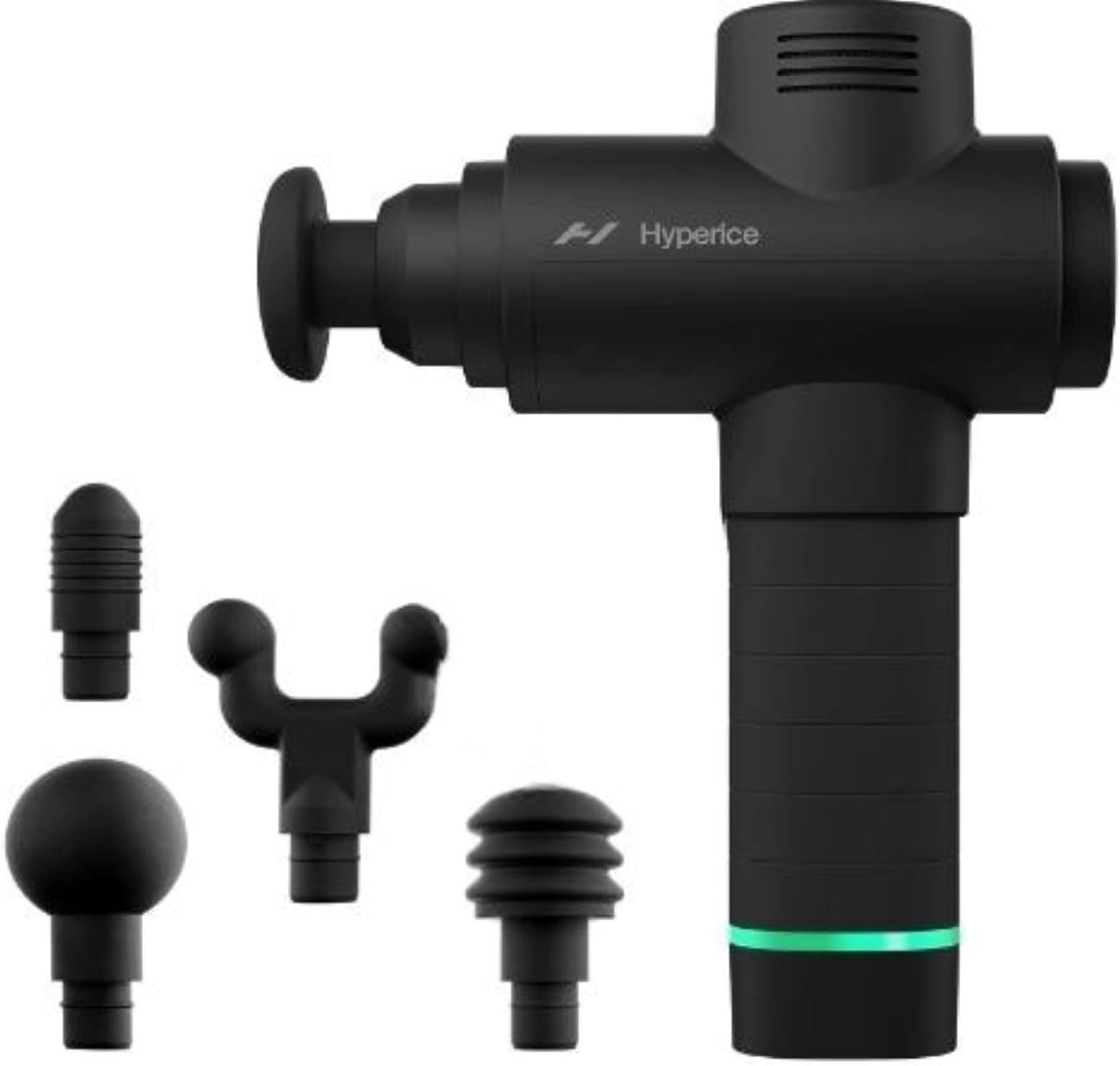
Hyperice Hypervolt 2 Handheld Percussion Massage Gun
The mainstream all-rounder: quiet enough for a shared room and forgiving enough to hand to someone who has never used a percussion gun
You pay for polish and brand reputation rather than raw output
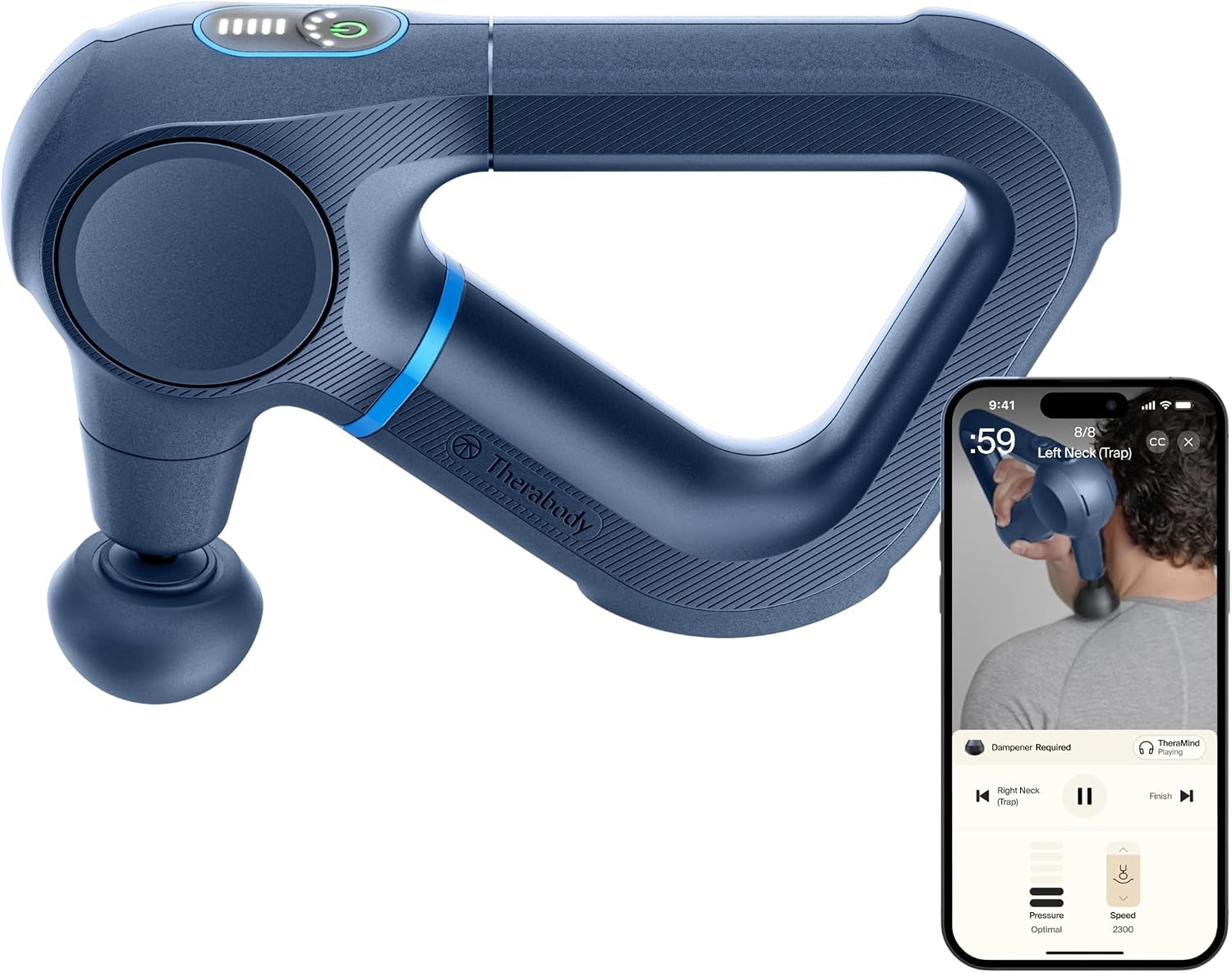
TheraGun Therabody Prime 6th Gen Deep Tissue Massage Gun, Navy
The build quality pick: equipment rather than accessory, made for people who use a gun five days a week
More device than a casual user needs, and the deep tissue focus takes some getting used to
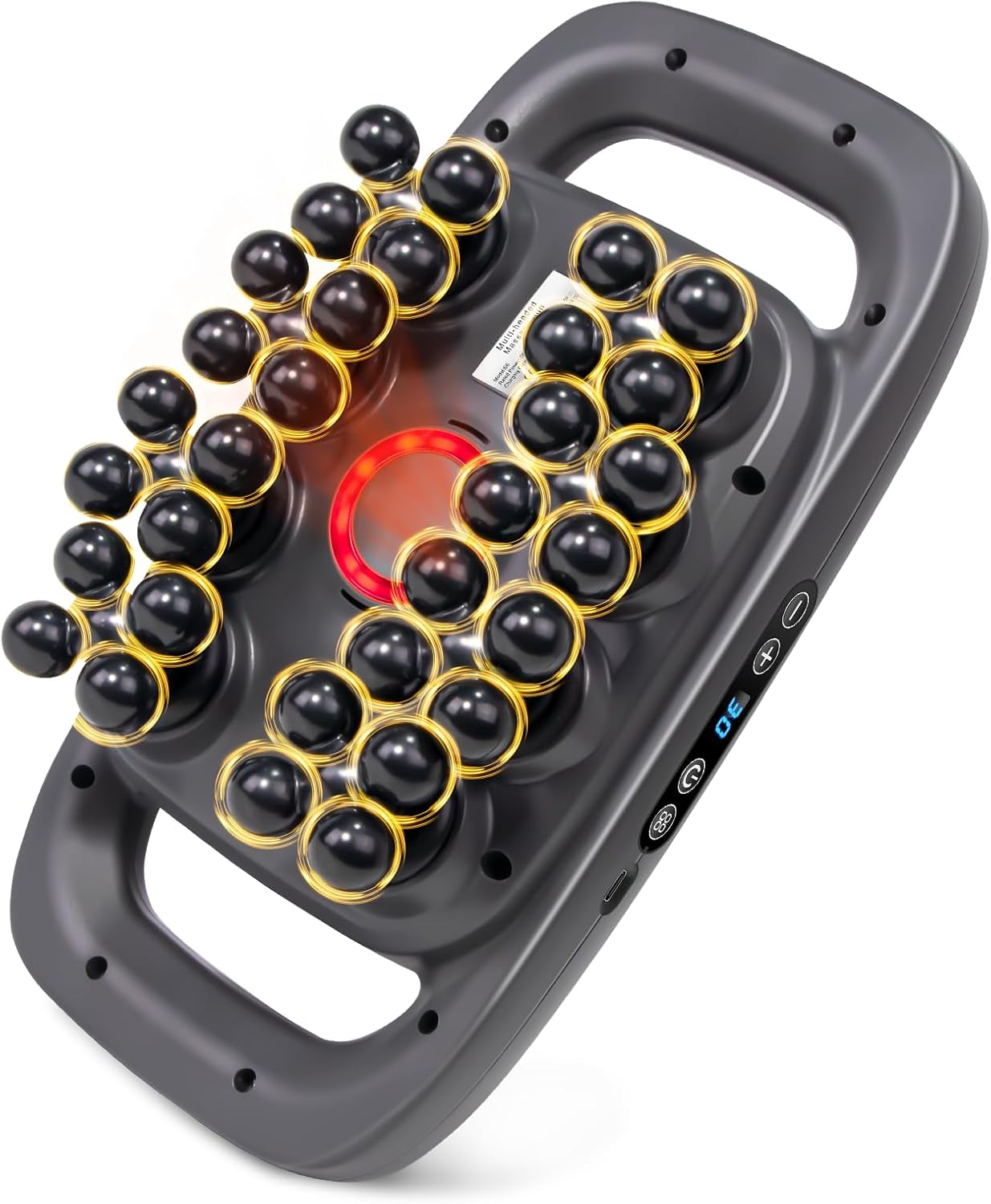
32-Head Massage Gun Deep Tissue Massager Gun Set, 3 Modes & 30 Levels
Flexibility for a starter: three modes, thirty levels, and thirty-two heads cover a lot of body parts while you figure out what you actually like
Budget guns are the ones that quit when you press hard, so the stall is the thing to test first
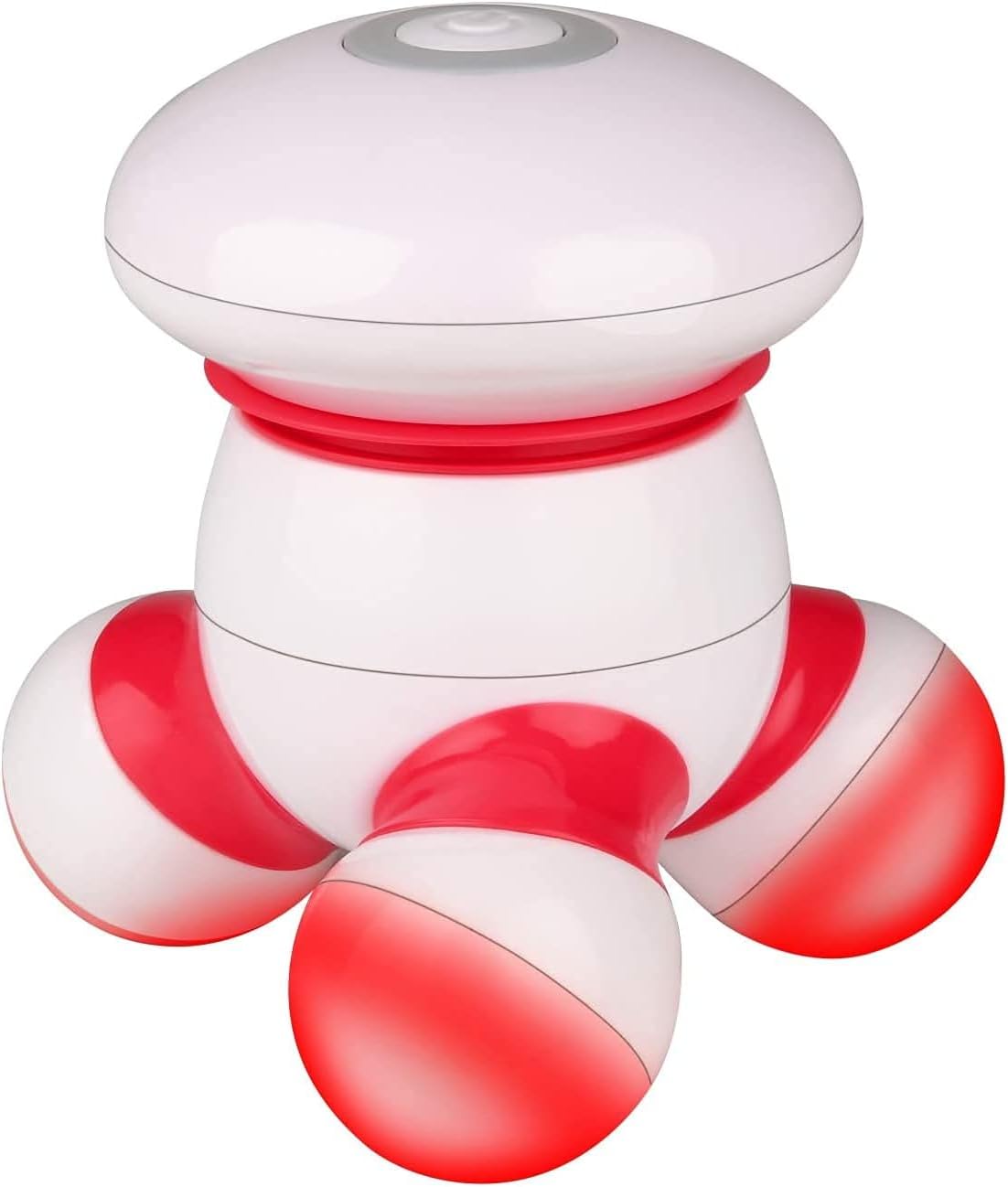
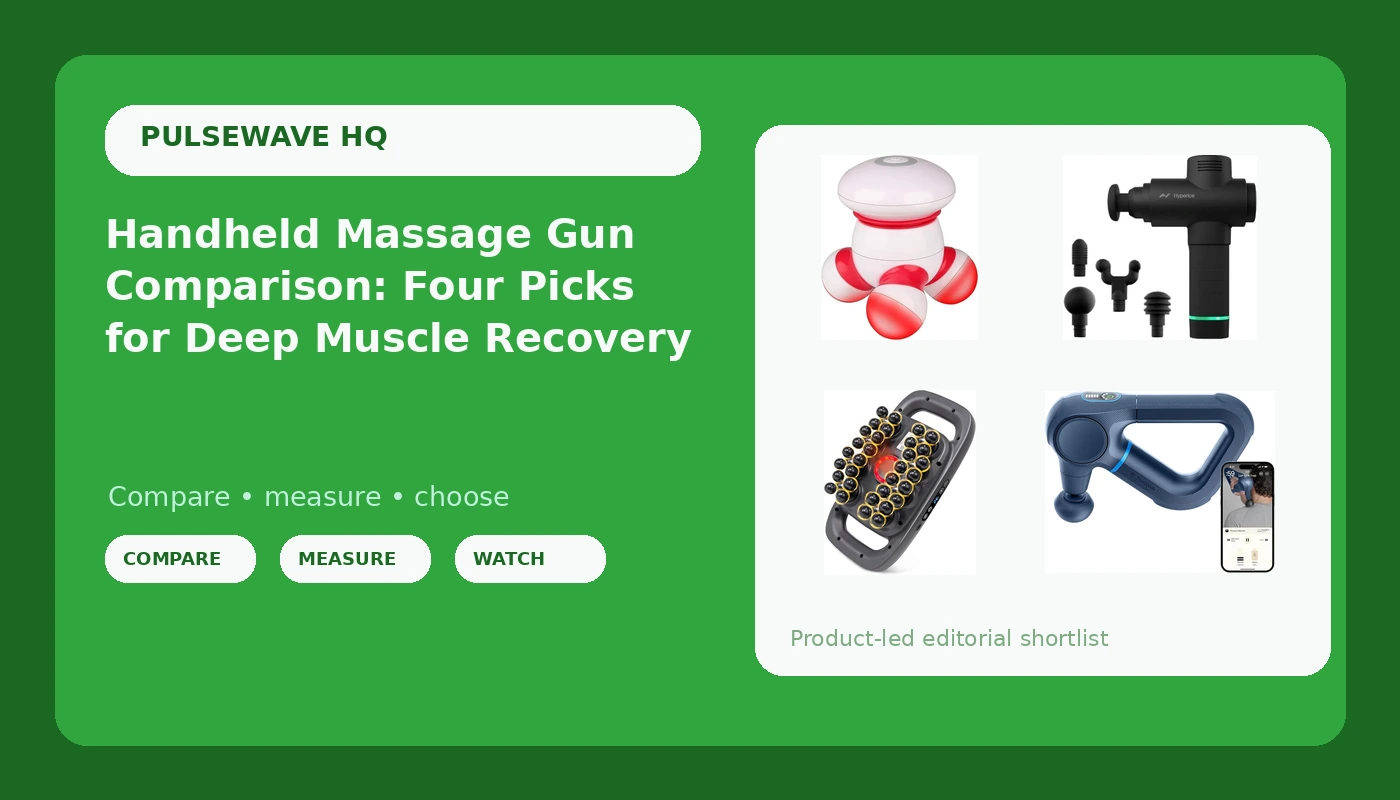
cotsoco Handheld Massager Mini Portable Vibrating Body Massager with LED Light
Genuinely pocketable, battery operated, with a grip sized for small areas like forearms, hands, and neck
It is a vibrating massager, not a percussion gun, and it will not do deep tissue work on big muscle groups
Prices and availability were captured from Amazon Creators API and may change.
The two numbers that actually decide this
Every gun I look at gets judged on two things before anything else: amplitude and stall force. Amplitude is stroke length, meaning how far the head travels on each thump, and it is what separates a device that reaches a muscle belly from one that buzzes the surface. Stall force is how much pressure the motor absorbs before the stroke quits. You can check both at home in about ten minutes. Press the head into a couch cushion and lean in, then press it into a bathroom scale and watch where the movement dies.
RPM is the number printed largest on the box, and on its own it tells you almost nothing. A gun can spin at an enormous stroke count with a shallow amplitude and feel like a phone on vibrate. When you compare devices, compare depth and load tolerance first and treat speed as a footnote. That is why a budget tool and a clinic gun can look similar on paper and behave nothing alike in your hands.
One more thing before the picks: this is recovery and warmup equipment, not treatment. I recommend these for loosening tissue and getting blood moving. I never recommend them for diagnosing or fixing an injury, and they go on muscle bellies only, never bone, joints, or the spine.
Hyperice Hypervolt 2: the one I hand to a beginner
Hyperice built its clinic reputation on two things, quiet operation at the speeds people actually use and a design that does not punish a nervous first-timer. The Hypervolt 2 sits squarely in that family: a handheld percussion gun aimed at deep muscle tissue work rather than gadgetry or attachment gimmicks.
If you have never owned a percussion gun, this is the safest entry point in the group. It is the one I would hand to a patient a few weeks out from a crash who wants to loosen a calf without bruising themselves, and it is the one I would suggest to a rider who wants a gun that lives in a gym bag and gets used four times a week without drama. The controls make sense, the pressure is manageable, and you are not going to accidentally grind a knot into a bruise on your first session.
Where it loses: you are paying for polish. If your priority is maximum depth on very large muscle groups, or you want a pile of interchangeable heads, this is not the value play in the group. It is the safe play, and safe is worth something when the alternative is a device you stop using after a month.
TheraGun Therabody Prime 6th Gen: the buy-once pick
Therabody is the brand that shows up in locker rooms, and the Prime 6th Gen in navy is that idea in a single tool: a deep tissue gun built to absorb abuse and keep its composure. In a group where two of the four devices are budget-oriented, this is the one that reads as equipment rather than accessory.
Buy it if you have already killed a cheap gun, or if you know you will use one five days a week for years. If you lift heavy, ride long, or you are the person your friends text when their back seizes the week before a race, the Prime is the one that will not be the weak link in that chain. The deep tissue focus means it wants to be used with intent, and it rewards that.
Do not buy it as your first massage tool. If you get sore twice a month after a gym session, this is more device than your habit justifies, and the deep tissue character can feel like too much on a neck or forearm until you learn to use it lightly. A mid-tier gun plus a lacrosse ball will cover that user for less. The Prime is for the person who already knows they will keep using it.
32-Head Massage Gun Set: flexibility on a starter budget
Three modes, thirty levels, thirty-two heads. If that reads as a red flag, your instinct is reasonable. In percussive therapy, the number of attachments is the easiest thing to inflate and the hardest thing to still care about by week three. But there is a real buyer for this set.
That buyer is someone who wants to try recovery work without committing, wants options for different body parts, and is not planning to lean their full body weight into the gun. For forearms, calves, and shoulders at moderate pressure, having a head for each area is genuinely useful, and the thirty levels let you find a speed that does not feel like an assault. As a first gun that teaches you what you like, it does the job.
Where it loses: this is a budget gun, and budget guns are the ones that quit when you press hard. Test the stall before you trust it on a hamstring in the middle of a training block. Press it into a cushion and lean until the movement changes character. If it holds under moderate load, you have a flexible starter kit. If it does not, you learned that in ten seconds in your living room instead of three weeks into a season.
cotsoco Mini Handheld Massager: the pocket tool, not a percussion gun
Read the description again on this one, because it matters. The cotsoco is a handheld vibrating massager with an LED light, battery operated, with a grip sized for hands, head, neck, back, legs, and arms. That is a different category from the other three, and it should be judged on its own terms.
What it does well is small-area, low-intensity work: forearms after a long descent spent death-gripping the bars, hands after a day of bike maintenance, a stiff neck after a desk week. It fits in a jersey pocket, a hydration pack, or a desk drawer, and it needs no setup. For travel, or for keeping in the car after a trailhead session, that portability is genuinely worth something.
What it cannot do is loosen a big quad at the end of a long ride. Vibration does not reach a muscle belly the way a percussive stroke does, and no amount of LED light changes that. Buy it as a light-duty companion tool, not as your primary recovery device, and you will be happy with it.
Noise, battery, and the paperweight test
Noise is the spec nobody advertises, and it is the one that determines whether a gun gets used. A device that is too loud to turn on while your partner is asleep, or while you are on a work call, becomes an expensive object in a drawer. I care much more about how a gun sounds at the middle speeds people actually use than about the top speed I will visit twice a year. If you live in an apartment or share a wall, that consideration should outrank raw output.
Battery math is the other quiet factor. The relevant question is not the rated number, it is whether the gun survives a week of twenty-minute sessions without a charge, and whether it still holds up after six months of that routine. A battery claim measured in a lab and a battery that survives a six-hour trail day with stops are two different things. Charge habits matter too: a tool that lives in a bag needs to handle being topped up whenever you remember, not on a strict schedule.
The trade-offs, side by side
The Hypervolt 2 trades maximum depth for usability. You are buying quiet operation, sane controls, and a device a beginner can pick up cold. The Therabody Prime trades price and a gentle learning curve for durability and a deep tissue character that heavy users will appreciate for years. The 32-head set trades stall force for head variety and adjustability, which is a fair trade for light and moderate use. The cotsoco trades percussion entirely for portability, and it is not trying to be something it is not.
None of these four is the right pick for everyone, and the most expensive one is not automatically the right answer for you. Match the tool to how often you will actually use it, then to your muscle mass and your sport.
How to match a gun to your body and your sport
If you lift heavy or ride long distances and you want one tool that will not let you down, the TheraGun Therabody Prime 6th Gen is the pick. Big quads, big glutes, and a weekly habit justify it.
If you want a first percussion gun, or you want something quiet enough to use at home without apologizing for it, the Hyperice Hypervolt 2 is the pick. It is the one I would suggest to most of the people who email me asking where to start.
If you are experimenting, working at moderate pressure on smaller areas, and you like having a head for every body part, the 32-Head Massage Gun Set is worth trying, with the caveat that you test the stall on day one.
If you travel, ride with a small pack, or you mostly want something for forearms, hands, and neck, the cotsoco Mini Handheld Massager fills a niche the percussion guns cannot. Just do not expect it to do their job.
Whichever you choose, the routine matters more than the hardware. Twenty minutes on the muscle bellies you actually worked, consistently, beats an hour of random passes on whatever hurts. Keep it off bone and joints, keep the pressure honest, and treat the gun as a tool that helps your body recover so your body can do the fixing.
What I am testing next
I am running 2026 models through a full Colorado riding season, with a logbook tracking stall force, stroke length, noise, and battery across three months of real use. That logbook is the reason the picks above lean on load tolerance rather than speed numbers, and it is the reason I am slow to recommend anything I have not leaned on myself. When the season wraps, the ones that survived will get updated notes here. The four in this comparison already have a clear role in that lineup, and roles are what most buyers are actually shopping for.