I have spent eight years as a physical therapy assistant in a Denver sports rehab clinic, and six of those years riding enduro mountain bikes on the Front Range. Both jobs punish my quads. So when people ask me which massage guns for muscle recovery are worth buying, I give them the same answer I give patients: the one whose amplitude and stall force match how you will actually use it, and that stays quiet enough that you will not dread turning it on after a long day.
I have watched a budget gun stall out on a patient's hamstring mid session, and I have watched a premium gun rattle a rider's hand numb at max speed. That is the real range you are shopping in, and neither extreme is about the number printed biggest on the box. This comparison covers four guns that come up constantly, from a 24 head kit to the Hyperice Hypervolt Go 3, and it covers which specs matter, which ones are marketing, and where each of these four actually fits.
Before any of it: a massage gun is a recovery and warmup tool. It does not fix an injury, it does not treat pain, and it never goes on bone, joints, or the spine. Muscle bellies only. If something is genuinely injured, that is a conversation with a clinician, not a product page.
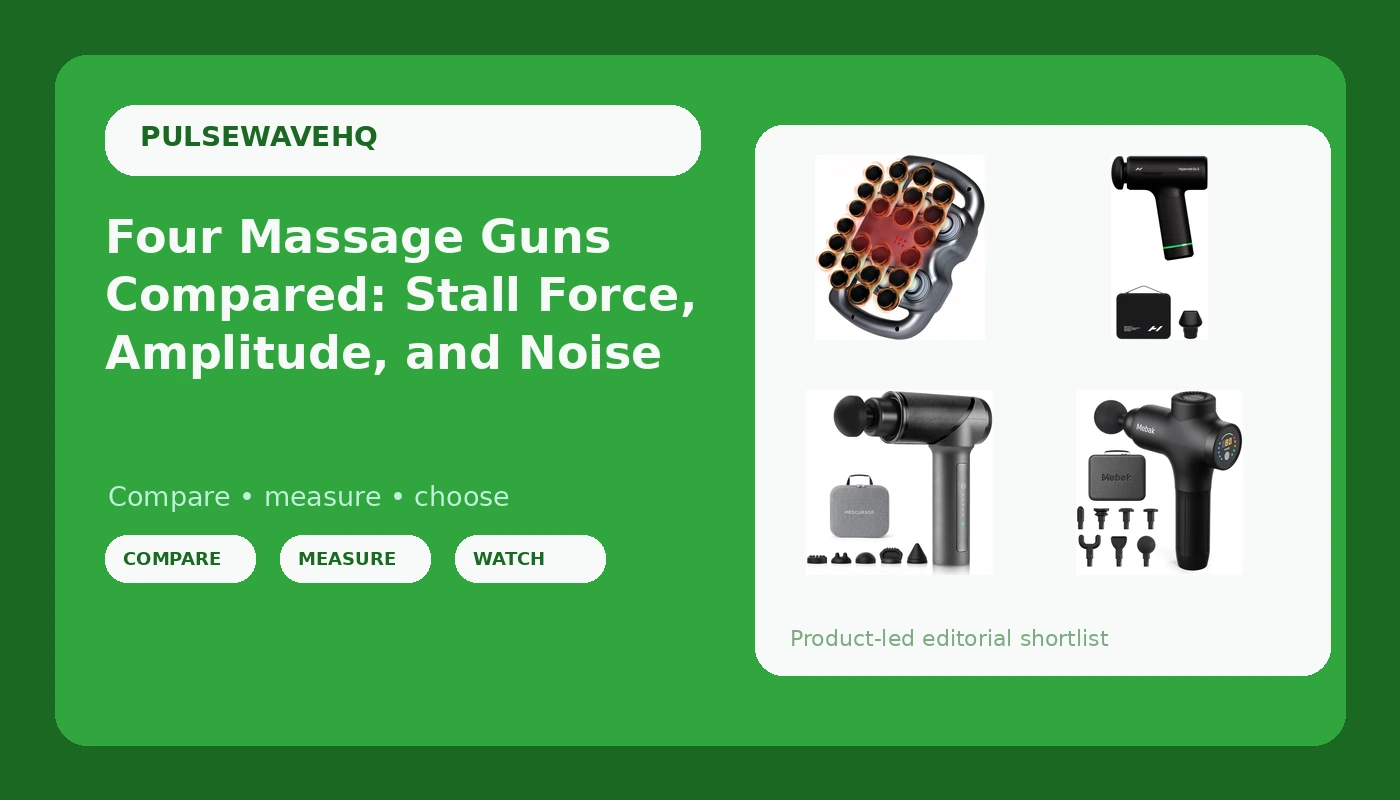
The short answer: the Hyperice Hypervolt Go 3 is the pick for most people who want one gun they will actually carry and use, the Mebak 3 is the pick if you want deeper percussive work for less money, the 24 head set is the household value play, and the Medcursor is the light duty option. Here is the full comparison.
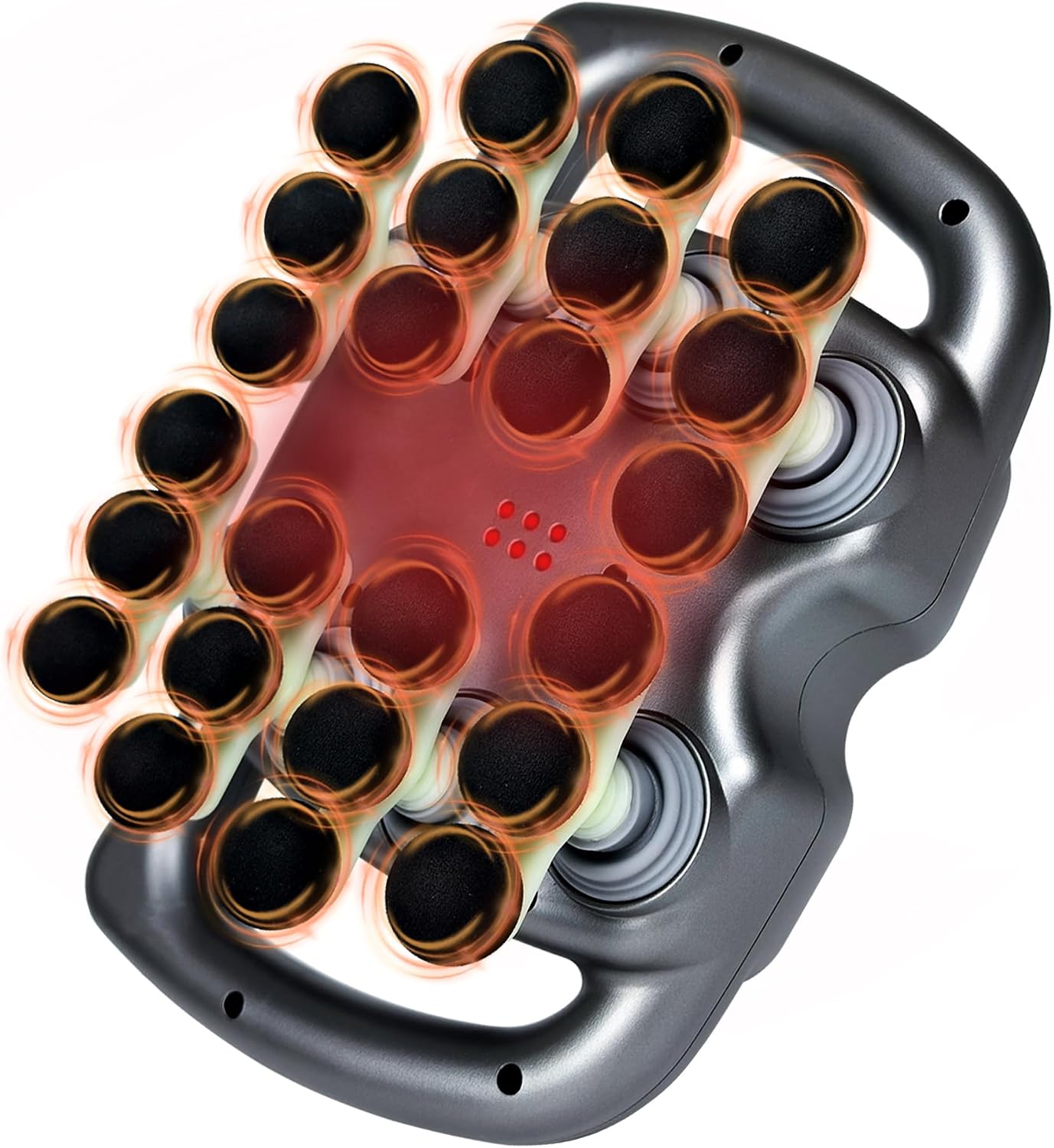
24 Head Massage Gun Set
Most attachments and the widest household appeal, doubles as a back massager
Attachment count says nothing about motor quality, not built for heavy pressure
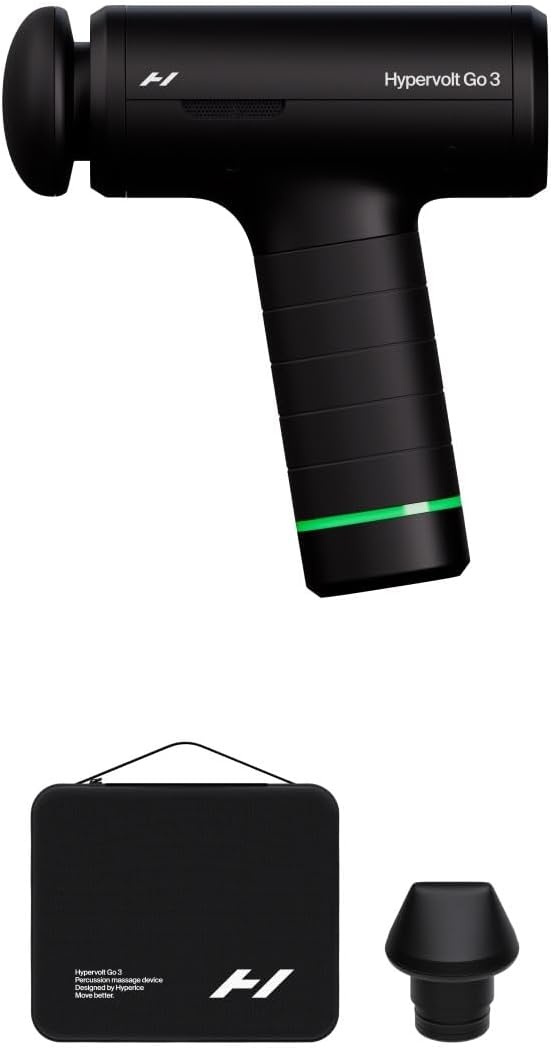
Hyperice Hypervolt Go 3
Lightweight, portable, comes with a carry case, clinic grade brand reputation
Most expensive of the four, compact body gives up some heavy pressure capability
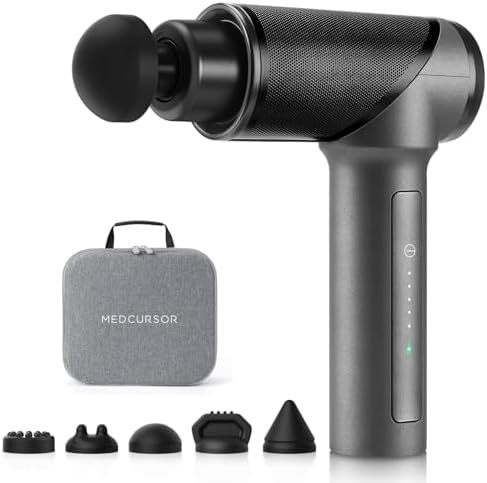
Medcursor Massage Gun
Brushless motor, six heads, quiet friendly for light use, low cost of entry
Lightest duty of the four, will give ground under real pressure
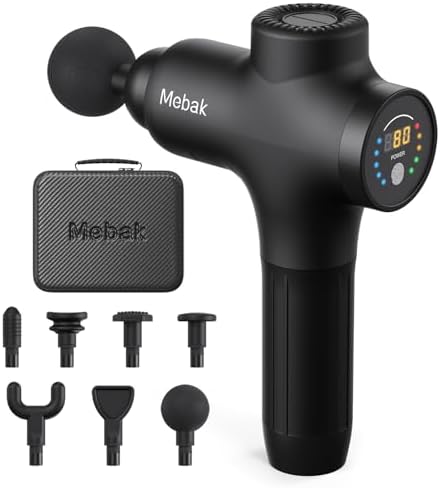
Mebak 3 Massage Gun
Aimed at deep tissue work on bigger muscle groups, mid tier pricing
Bulkier than a travel gun, fewer included heads than a big kit
Prices and availability were captured from Amazon Creators API and may change.
How I judge a massage gun
Three things decide whether a gun is useful or a paperweight, and only one of them is printed on the box.
Amplitude is stroke length in millimeters, meaning how far the head travels on each thump. It is the difference between a percussive tool that reaches into a quad and a vibration plate you happen to be holding. For general recovery on legs and back, I want a gun that feels like it is getting under the surface, not just tapping the skin. Anything that feels like a phone buzzing has no business in a gym bag.
Stall force is how much pressure the motor takes before the stroke stops moving. This is the spec that separates a massage gun from a buzzer. Press a light duty gun into a tight hamstring and the head simply stops, which means you get no work done at the depth you need. Ask a brand for stall force and most will change the subject, which tells you plenty.
Noise at the speed people actually use is the third. A gun that is only tolerable on its lowest setting is a one speed gun with extra buttons. If it is loud enough that you will not use it in an apartment at 9 p.m., it does not matter how strong it is.
Everything else, including the big RPM number on the front of the box, is decoration. RPM is strokes per minute. Without amplitude behind it, high RPM just means a fast, shallow tap.
Hyperice Hypervolt Go 3: the one I would hand to most people
Hyperice is the name that shows up most in PT clinics, and the Hypervolt Go 3 is the travel sized version of that reputation. The listing describes it as lightweight, and it ships with a carry case, which matters more than it sounds. The best massage gun is the one that is in your bag when you need it.
What I like about the Go 3 for a general user is that it is built for someone who wants a single well made tool rather than a drawer full of attachments. Hyperice has a long track record in this category, the form factor is small enough to live in a backpack or a bike bag, and the controls tend to be simple enough that you are not reading a manual on the floor of a garage.
Where it gives ground: this is not a deep tissue hammer for someone with a lot of muscle mass who wants to lean their full weight into a quad. It is a compact gun, and compact guns trade some heavy pressure capability for portability. It is also the most expensive of these four. If you want maximum depth per dollar, this is not the value pick.
Who it fits: the rider, runner, or desk bound lifter who wants one portable gun and is willing to pay for build quality instead of attachment count.
Mebak 3: deep tissue work for athletes at a mid tier price
The Mebak 3 is positioned by the brand as a deep tissue massager for athletes. That framing is the right one, because the reason to buy this gun over a cheap kit is percussive depth on bigger muscle groups.
For a cyclist or a lifter, the practical use case is quads, glutes, calves, and lats, the muscle bellies that take the beating and that a light gun cannot reach. A gun in this class is what I would reach for before a hard session to wake tissue up, and after a hard session to get blood moving through it.
The trade-offs: it is a mid tier gun rather than a compact travel tool, so it is bulkier than the Go 3 and less likely to end up in a jersey pocket. It also carries fewer included heads than a big kit, which is fine, because most people use two or three attachments and ignore the rest.
Who it fits: the athlete who wants deeper work than a budget gun delivers and would rather spend on motor quality than on a 24 piece accessory case.
24 Head Massage Gun Set: the household value play
Twenty four heads is a lot of heads, and I want to be honest about what that number means. Most of them will spend their life in the case. But the kit approach has a real advantage for a household: different people, different bodies, different preferences, and one gun that covers a back massager role as well as legs and arms.
For a family or a couple, this is the gun that gets used by everyone, because nobody has to negotiate over the one attachment they like. It also tends to be the lowest cost of entry in a comparison like this, which makes it the right first gun for someone who is not sure how much they will actually use one.
Where it gives ground: attachment count is not a spec that tells you anything about the motor. A kit like this is not the gun I would buy if my main goal is deep pressure on large muscle groups, and it is not the gun I would buy for quiet operation. Buy it for versatility and price, not for stall force.
Who it fits: households, casual users, and anyone who wants a back and shoulder tool more than a serious recovery instrument.
Medcursor Massage Gun: the light duty pick with six heads
The Medcursor is the other value option here, and the listing describes a high intensity brushless motor and six massage heads. A brushless motor is a genuinely good thing to see, because it usually means less noise, better efficiency, and a longer service life than a cheap brushed motor.
Six heads is a sensible middle ground. You get the flat head, the ball, the fork, and the bullet style shapes that cover most recovery work without a pile of duplicates. For a beginner that is less overwhelming than a 24 head case, and it costs less than the Hyperice.
Where it gives ground: this is the lightest duty option of the four. If you are a heavy lifter or a big rider who wants to lean into a tight quad, a gun in this class will let you down before a mid tier or premium gun will. It is a great entry point and a poor substitute for a deep tissue tool.
Who it fits: someone testing whether they will actually use a massage gun, or someone who wants a light, low cost gun for shoulders, calves, and post desk stiffness.
Noise, battery, and the specs that are not on the box
Two things I will not do here: quote a stall force or amplitude number that a brand does not publish, and pretend that a lab battery figure reflects a real week.
On noise, the practical rule is simple. If you cannot hold a normal conversation while the gun is running on the setting you like, you will use it less. That holds regardless of the brand on the side.
On battery, the honest question is not how many hours the spec sheet claims. It is whether the gun survives a week of 20 minute sessions without a charge, because that is how most people actually use one. Look for USB C charging, a clear battery indicator, and a brand that states runtime at each speed rather than one cherry picked number at the lowest setting.
And on apps: if a gun gates basic features behind a subscription, that is a hard no for me. You should not need an account to turn on a motor.
Which one should you buy?
If you want one gun, want it portable, and want it to last, the Hyperice Hypervolt Go 3 is the pick, and the carry case is part of the value because it is the reason the gun leaves the house.
If you want deeper percussive work on big muscle groups and you are shopping on value, the Mebak 3 is the middle ground and the one I would point an athlete toward.
If you are outfitting a household or buying your first gun, the 24 Head Massage Gun Set gives you the most flexibility for the least commitment.
If you want something light and simple, with a brushless motor and six heads, the Medcursor is the low cost entry point.
What I tell patients
The gun matters less than the habit. Twenty minutes of slow, deliberate passes over a muscle belly after a hard session beats a five minute blast at max speed. Move slowly, keep the head on the meat of the muscle, and stop if anything feels sharp rather than sore. Recovery is a skill you practice, not a product you buy. The gun is just the tool that makes practicing it easier.