Your quads are still angry two days after a long ride, and the foam roller is not getting it done. A percussion massager can help move blood through a muscle belly before and after hard efforts, but this category is genuinely messy to shop. Two listings can carry almost the same name and describe completely different tools, and the number printed biggest on the box, strokes per minute, tells you very little about how a device feels on a working muscle. This guide covers deep tissue massage guns that are currently listed and easy to buy, and it focuses on the things that actually separate a useful recovery tool from a buzzing paperweight: how far the stroke travels into tissue, how much pressure the motor holds before it stalls, how loud the gun is at the speed you will really run it, and whether the package gives you the attachments and portability you need.
Related: How to Use a Massage Gun Without Bruising Yourself
Quick answer
The Hyperice Hypervolt Go 3 Percussion Massage Gun Lightweight with Carry Case is the strongest fit for people who want one gun that travels, because it is the lightest option in this group and the only one that includes a carry case, so it is the model most likely to leave the house with you. Choose the Theragun Relief Special Edition Bundle instead when you want a percussion-first package with accessories from a brand that builds its lineup around this type of device.
Massage guns worth comparing
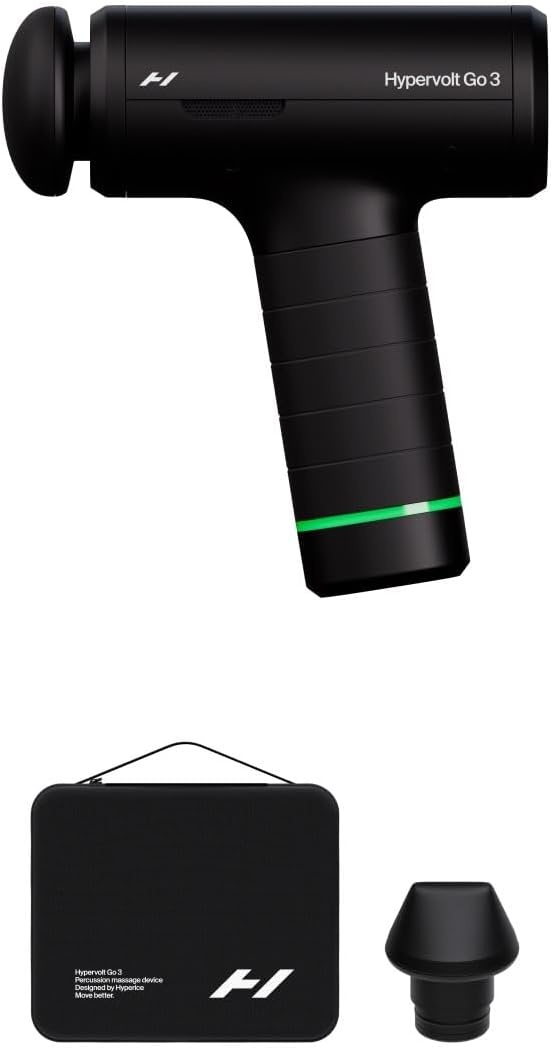
Hyperice Hypervolt Go 3 Percussion Massage Gun Lightweight with Carry Case
A lightweight percussion massage gun from Hyperice that ships with a carry case, which makes it the easiest of the six to keep in a gym bag or trail kit.
Visit on Amazon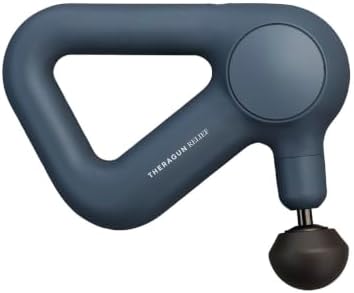
Theragun Relief Special Edition Bundle
A bundle built around Theragun's Relief percussion device, sold as a special edition package rather than a bare tool.
Visit on Amazon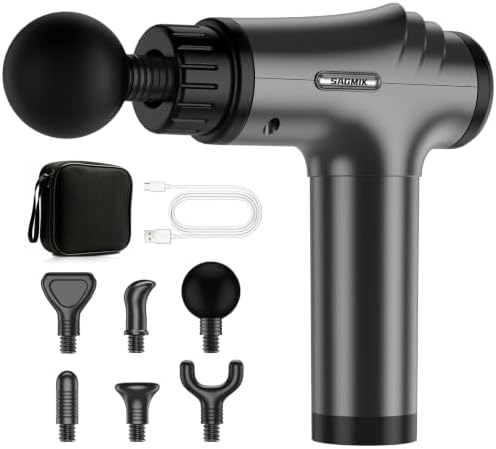
Massage Gun, 30 Speeds, 6 Heads, Quiet Deep Tissue Muscle Massager
Thirty speed settings and six interchangeable heads give this deep tissue massager a wide range of adjustment, and the listing emphasizes quiet operation.
Visit on Amazon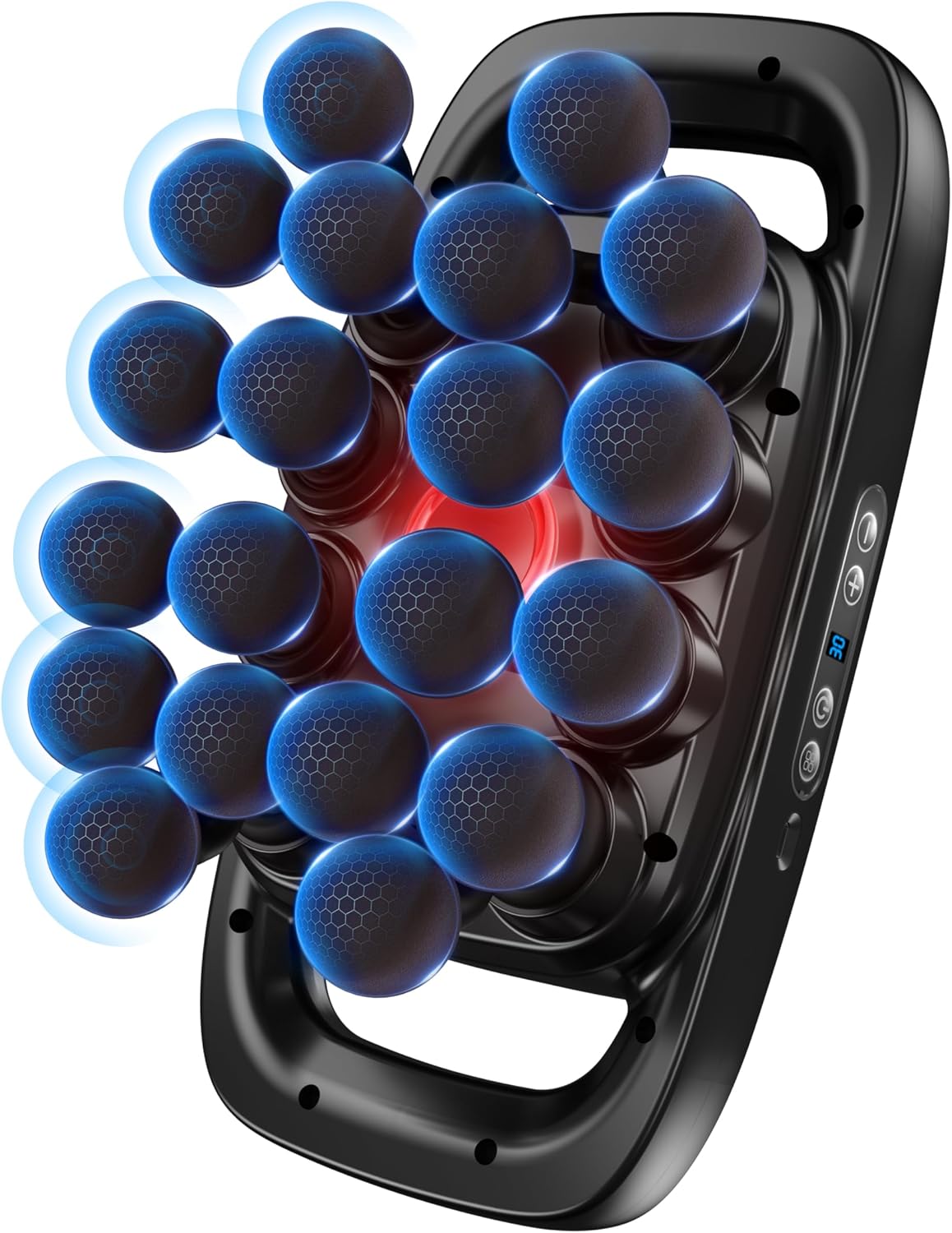
20-Head Massage Gun Deep Tissue Percussion Massager with 3 Modes
Twenty interchangeable heads and three operating modes make this the most attachment-heavy option in the group.
Visit on Amazon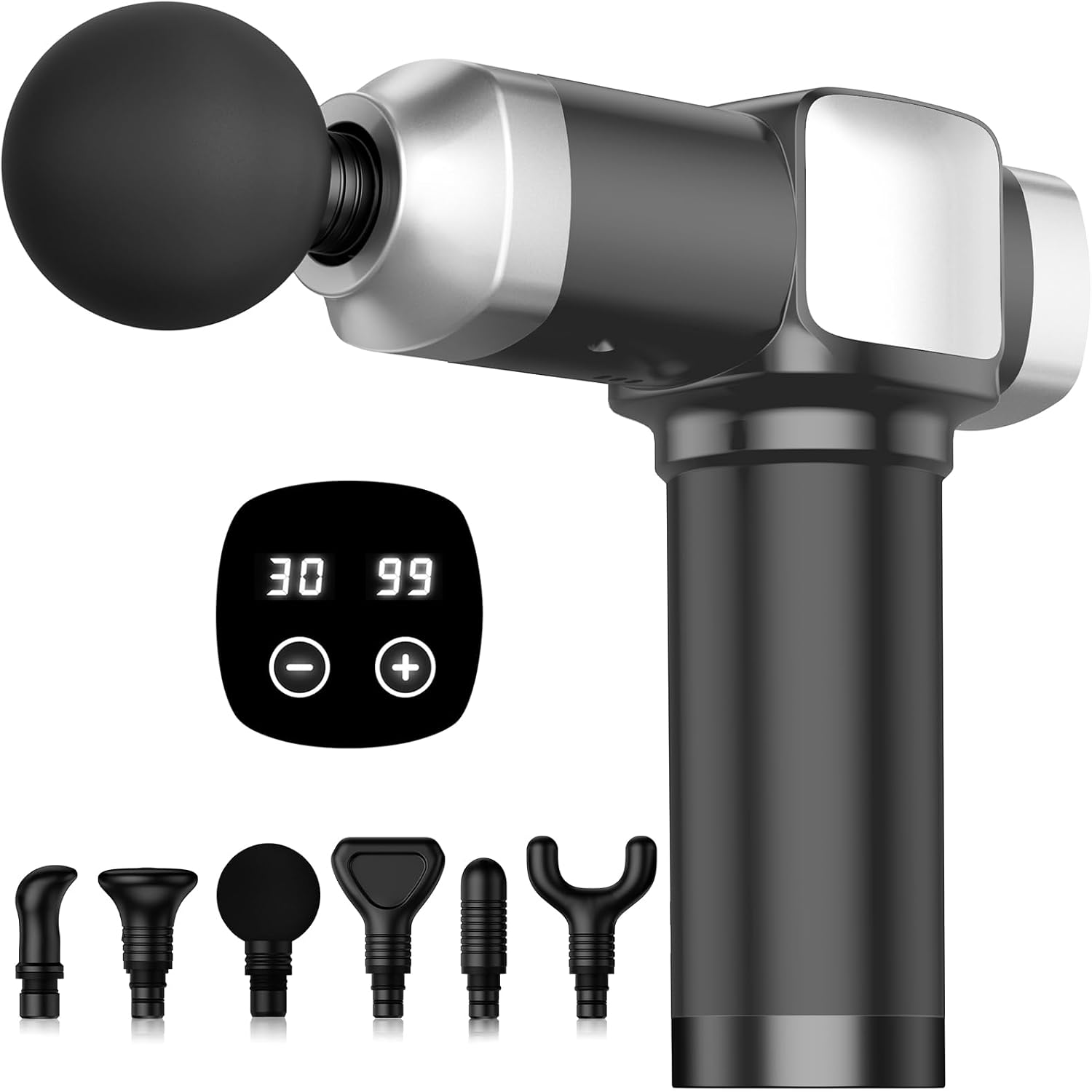
Massage Gun Deep Tissue, Handheld Percussion Muscle Massager for Back
Check current Amazon price
A handheld deep tissue percussion massager aimed at back work and larger muscle groups, sold as a straightforward single-tool package.
Visit on Amazon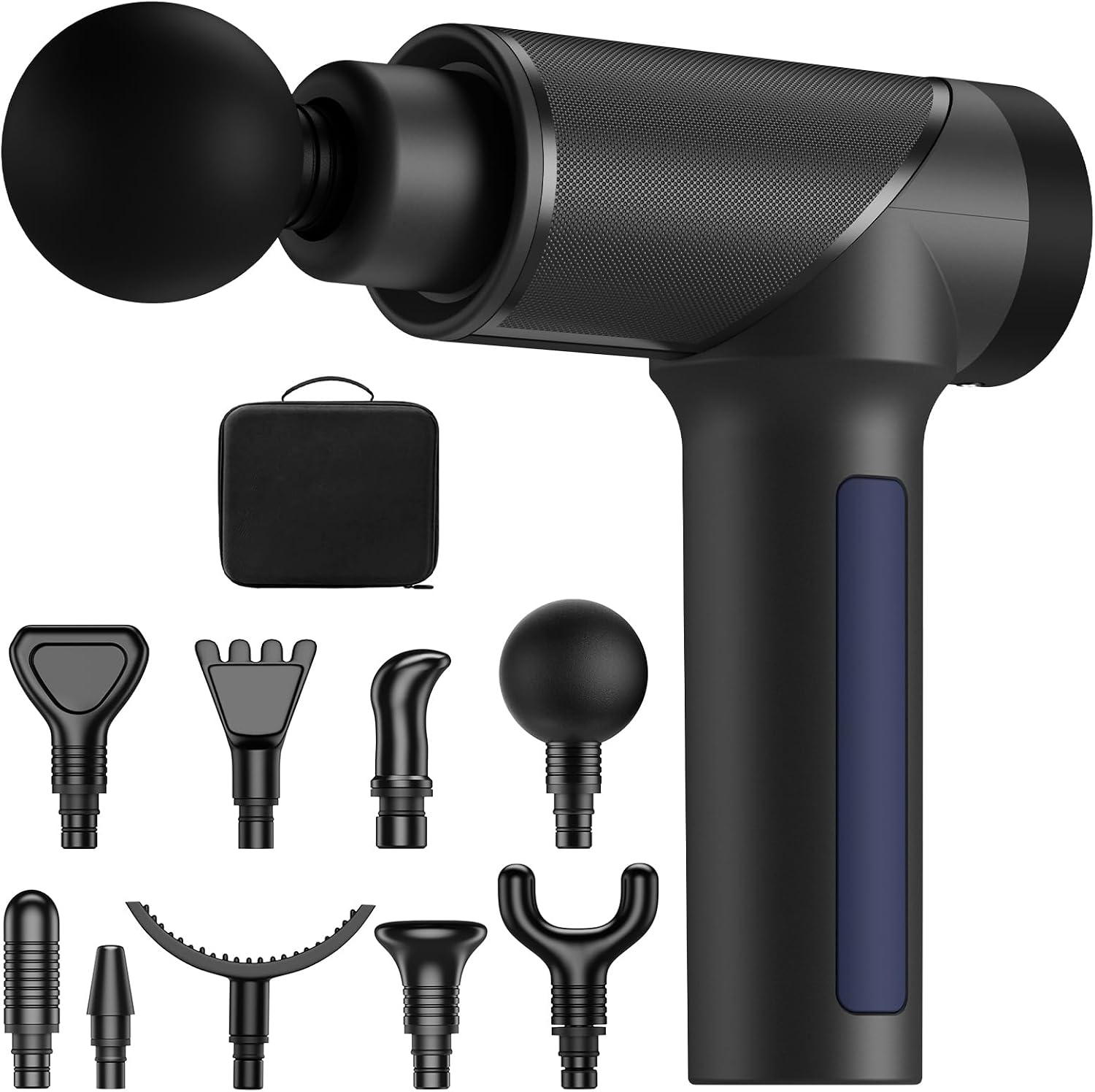
Massage Gun Deep Tissue,Handheld Percussion Muscle Massager for Back
A second handheld deep tissue percussion massager for back work, listed under a nearly identical name to the model in the card above.
Visit on AmazonPrices and availability may change. Check the retailer for current details.
How these products were compared
This guide compares five things: stroke depth and amplitude class, pressure tolerance at the motor, noise at the speeds people actually use, attachment and mode variety, and portability along with battery expectations. Amplitude is the criterion that matters most, because it describes how far the head travels into a muscle belly on each stroke. Strokes per minute are not a substitute for it. A device rated at a very high stroke count with a short throw feels like a vibration plate, not a massager.
Product names, images, and retailer links are matched by product identifier so that every card points to the product shown. Two of the six listings in this roundup carry nearly identical names, so match on the card and the product image rather than on the name alone.
Where a brand does not publish a measured pressure limit or a stroke length, this guide does not invent one. That is why some cards here describe attachments, modes, and portability instead of quoting a depth figure nobody has verified. Treat any specification that appears only in a marketing headline as unconfirmed until it shows up in the product documentation or the owner's manual.
How to choose the right massage gun
Start with stroke depth, not speed. Stroke length is what determines whether a percussion device reaches a muscle belly or just tickles the surface. Short-stroke tools are fine for the neck, forearms, and feet, where the muscle is thin and the tissue is sensitive. Larger muscle groups, meaning quads, hamstrings, glutes, and calves, want a longer throw, because a short stroke gets absorbed by the first layer of tissue and never reaches the part that is actually tight. If a listing never states a stroke length anywhere, that is information about the product, not an oversight by the seller.
Pressure tolerance is the second filter. Every gun feels fine when you rest it on a thigh; the difference shows up when you lean into a hamstring. A motor that quits under load turns the device into an expensive buzzer, so look for a stated pressure or stall figure rather than a "therapy-grade" badge. If a manufacturer advertises professional-grade internals without publishing that number, that is marketing, not a measurement.
Then weigh noise. A gun you avoid because it drowns out a podcast or wakes the household is a tool you paid for and left in a drawer. Noise usually climbs as speed climbs, so judge the device at the setting you will actually run, not the lowest one. A model whose listing specifically calls out quiet operation is the safer bet if you live in a shared space or plan to use it in a gym.
Attachment count is the last thing to weigh, and it is usually the least important. A gun with twenty heads is not automatically better than one with six; most people settle on one or two heads and never touch the rest. Head variety is genuinely useful when it covers different jobs, such as a flat head for large muscle bellies, a round head for general work, and a narrow tip for tight spots, but a pile of near-duplicates is filler.
Two practical constraints deserve a mention. Weight matters more than it sounds, because you hold the device at arm's length for several minutes at a time, and the lightest model here is the easiest to use one-handed. Battery expectations should be judged on realistic sessions rather than lab claims. For more on why pressure tolerance changes what a gun can do, see our explainer on stall force and amplitude.
Hyperice Hypervolt Go 3 Percussion Massage Gun Lightweight with Carry Case
The Hypervolt Go 3 is the top pick here for a simple reason: it is the lightest device in this group and the only one that ships with a carry case. That combination decides how often a gun actually gets used. A percussion massager only helps if it is within reach when your legs are stiff, and a light tool with its own case is the one that ends up in a gym bag, a race duffel, or the back of a car.
Hyperice builds the Hypervolt family around handheld percussion, and the Go 3 is the travel-oriented entry in that line. The listing presents it as lightweight and packaged with a case rather than as a maximum-force device, which is the right framing for what it is. This is a gun for warmups, post-ride flush work, and neck and shoulder sessions at the end of a desk day.
The trade-off is straightforward. A lightweight body generally means less mass to absorb pressure, so this is not the tool to choose if your goal is leaning hard into a large quad for several minutes at a time. If you want the deepest throw and the most attachment options, the bundles and multi-mode models below are the ones to compare. If you want one gun that goes everywhere with you, start here.
Alternatives to consider
The Theragun Relief Special Edition Bundle is better suited to someone who wants a percussion-focused brand and a package that arrives with accessories rather than a bare tool, while the Massage Gun, 30 Speeds, 6 Heads, Quiet Deep Tissue Muscle Massager is a stronger fit when you want fine control over intensity, since thirty speed settings let you dial in a level instead of choosing between a few broad modes.
The 20-Head Massage Gun Deep Tissue Percussion Massager with 3 Modes, Massage Gun Deep Tissue, Handheld Percussion Muscle Massager for Back, and Massage Gun Deep Tissue,Handheld Percussion Muscle Massager for Back cover the simpler end of the category: a handheld body, a set of heads, and a handful of modes. The 20-head model is the most attachment-heavy option in the roundup, which is useful if you like having a dedicated head for every area and do not mind storing the extras. The two back-focused handheld listings are near twins in name, so check the card, the image, and the retailer link before you order, and confirm which one you are actually buying.
Day-to-day use and maintenance
Percussive therapy is a recovery and warmup tool, not a treatment. It helps move blood and loosen tissue so your body can do its own repair work. It does not fix an injury, and it is not a substitute for a clinician's assessment if something has been bothering you for more than a couple of weeks.
Stay on muscle bellies. The head should travel over the thick part of a muscle, never on bone, joints, or the spine. The spine in particular is a hard no, because the vertebrae and the tissue directly over them are not a target. Work along the length of the muscle in slow passes, keep pressure at a level you would describe as firm but not painful, and spend a minute or two per area rather than parking on one spot.
Most of these devices ask for very little upkeep. Wipe the housing and the heads with a damp cloth instead of soaking them, keep the charging port dry, and store the gun at a partial charge if it is going to sit unused for weeks. Follow the manufacturer's cleaning instructions for your specific model, and check whether the heads are removable and washable, because that varies by design. If a head starts to wobble or a battery stops holding a charge, contact the seller about warranty coverage rather than opening the housing yourself.
Buying checklist
- Decide whether the gun needs to fit in a backpack, a duffel, or a jersey pocket, and choose a case accordingly.
- Choose stroke depth based on the muscles you work most often, not on the highest speed number in the listing.
- Confirm that the exact model includes the attachments and modes you plan to use, and whether the heads are removable.
- Check the stated pressure or stall figure if you plan to press hard into large muscle groups.
- Read the cleaning and maintenance instructions before the return window closes.
- Verify the current retailer price, availability, and return terms.
Final recommendation
Choose the Hyperice Hypervolt Go 3 Percussion Massage Gun Lightweight with Carry Case when you want a light, portable gun that is easy to keep with you and to run one-handed for warmups and post-ride recovery. Choose the Theragun Relief Special Edition Bundle when you would rather have a percussion-focused package with accessories included and do not need the smallest possible tool. If your priority is maximum attachment variety or a wide spread of intensity settings, the 20-head and 30-speed models are the two to compare side by side. And when two listings look identical on the page, order from the card whose image and link match the product you actually want, because names in this category are not unique.