I've been a physical therapy assistant in Denver for eight years, working with everyone from pro cyclists to weekend warriors coming back from crashes and overuse injuries. My own weekends go to enduro mountain biking, so I know exactly what a 30 mile Saturday does to a set of quads by Sunday morning. That combination makes me the guy friends text before they buy affordable massage guns. I've owned more than 20 of them over the years and kept a spreadsheet on every one, and the pattern never changes: the number printed biggest on the box is almost never the number that decides whether you're still using the thing three months later.
So when four guns land on my desk at once, I don't rank them by brand or by the size of the type on the packaging. I rank them by what they can actually do to a muscle belly, which comes down to stroke depth, how much pressure the motor takes before it stalls, and how loud the thing is at the speed you'd really use. Here's how the RENPHO Ascend, the RENPHO Active Thermacool 2, the Massage Gun with Heat, and the Jancane Mini stack up for recovery and warmup work.
Related: Massage Gun Amplitude Explained: 6mm Vs 10mm Vs 16mm
The most versatile of the four is the RENPHO Ascend, because it's the only one whose amplitude adjusts, from 6mm up to 12mm, so it can do light flush work on a neck or forearm and deeper work on quads and glutes. If you want something that lives in a backpack and gets used on calves at your desk, the Jancane Mini is the pick. If heat and cold are what get you moving, the RENPHO Active Thermacool 2 is the only one here that does both, and the Massage Gun with Heat is the simpler heat-first option. Keep one thing straight before we go further: a gun is a recovery and warmup tool, not a treatment device. It doesn't fix an injury, and it never goes on bone, joints, or your spine.
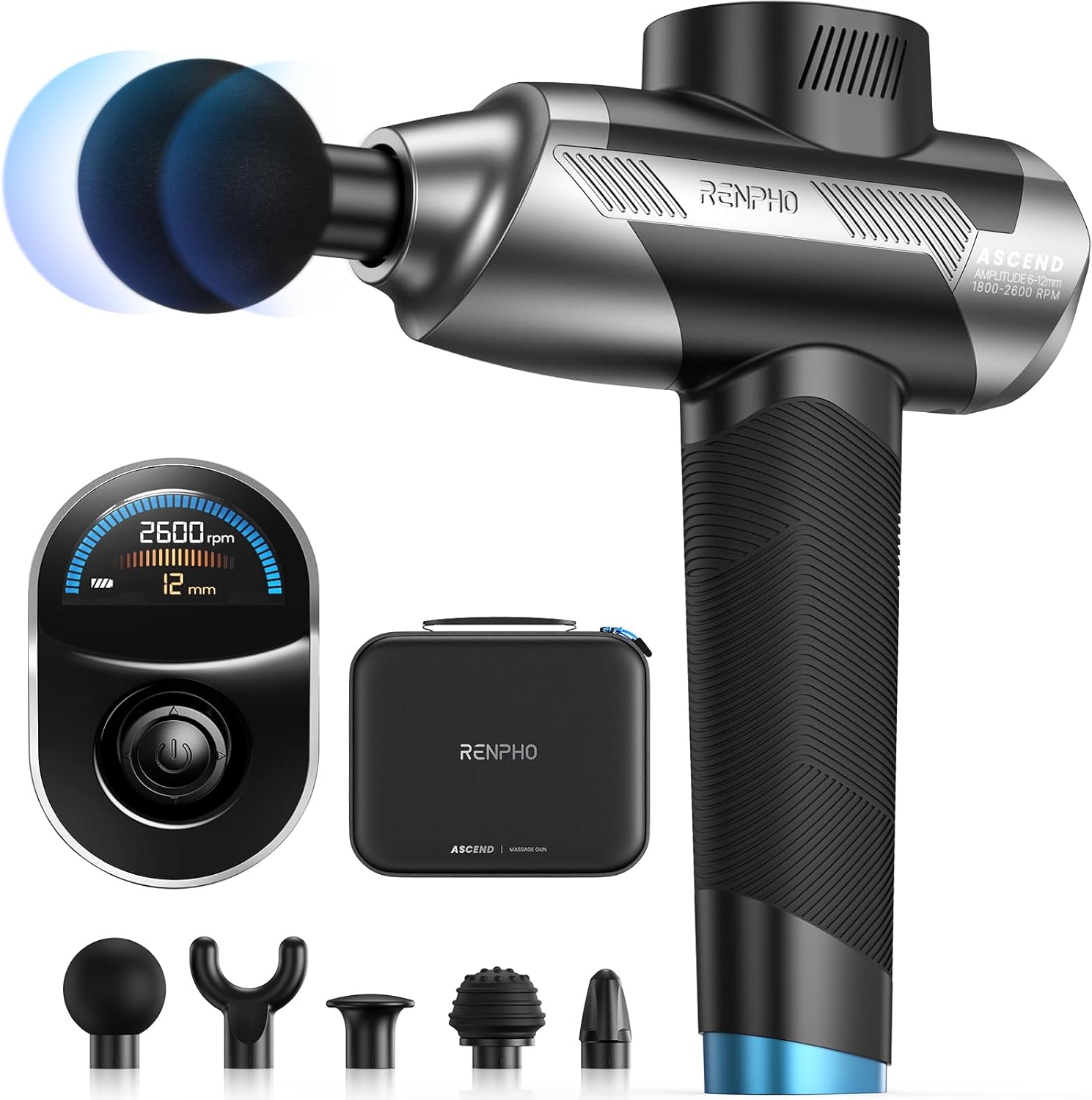
RENPHO Ascend Massage Gun, Adjustable 6-12mm Amplitude
Adjustable 6-12mm amplitude covers light flush work and deeper muscle bellies with one tool
No heat or cold, and you're paying for the adjustable mechanism
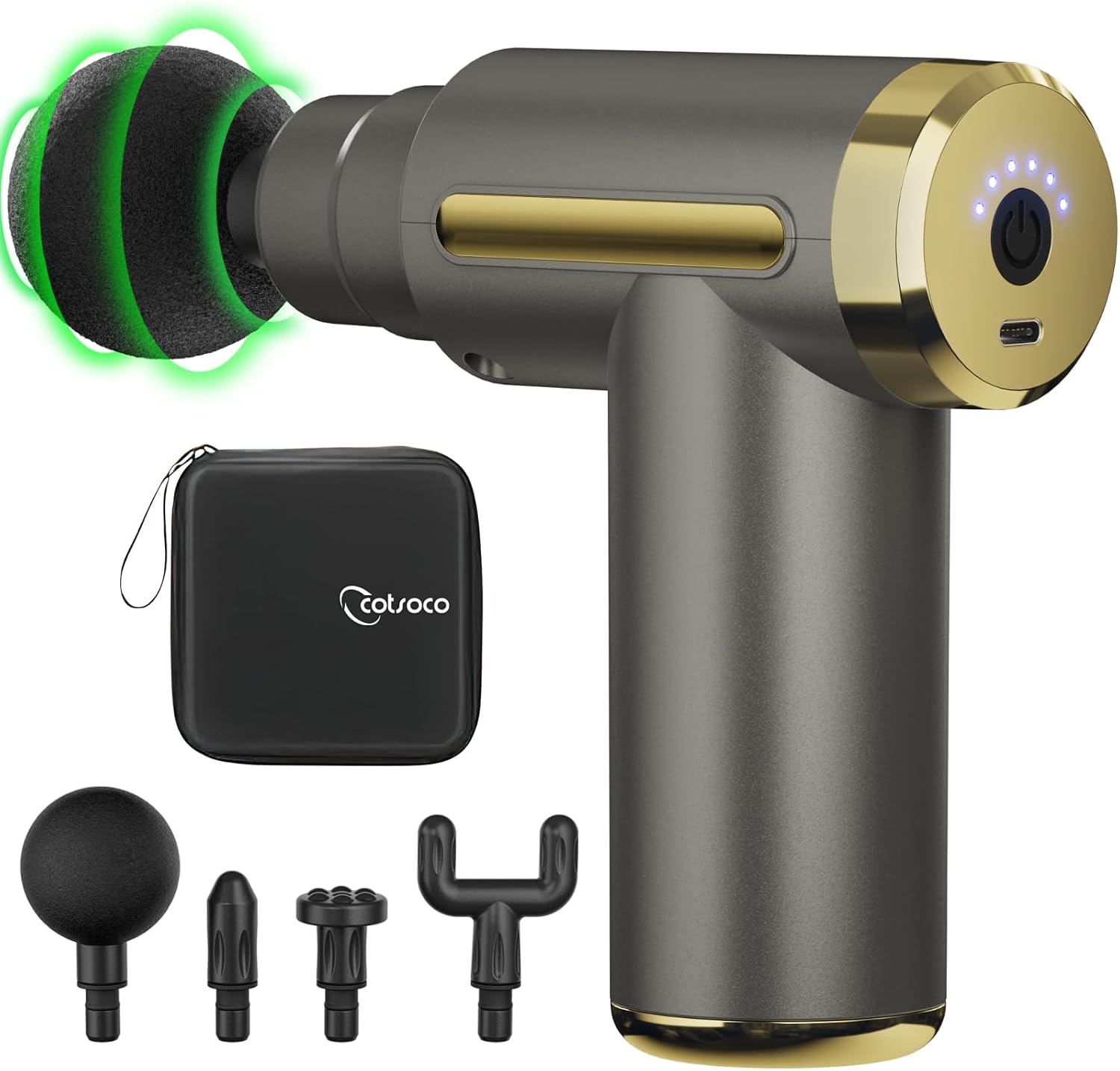
Jancane Mini Massage Gun, Deep Tissue Muscle Massager with 6 Speeds & 4 Heads, Super Quiet Handheld Percussion Massager
The one that actually leaves the house, with 6 speeds, 4 heads, and a quiet-first design
Mini format means less mass and stroke depth for big quads and hamstrings
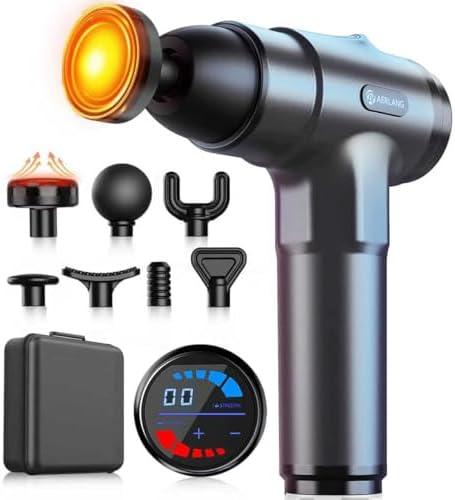
Massage Gun with Heat Massager Deep Tissue Muscle Massager
Heat plus percussion in one device, simple to use, obvious gift
Listing name tells you about heat but not amplitude or stall force
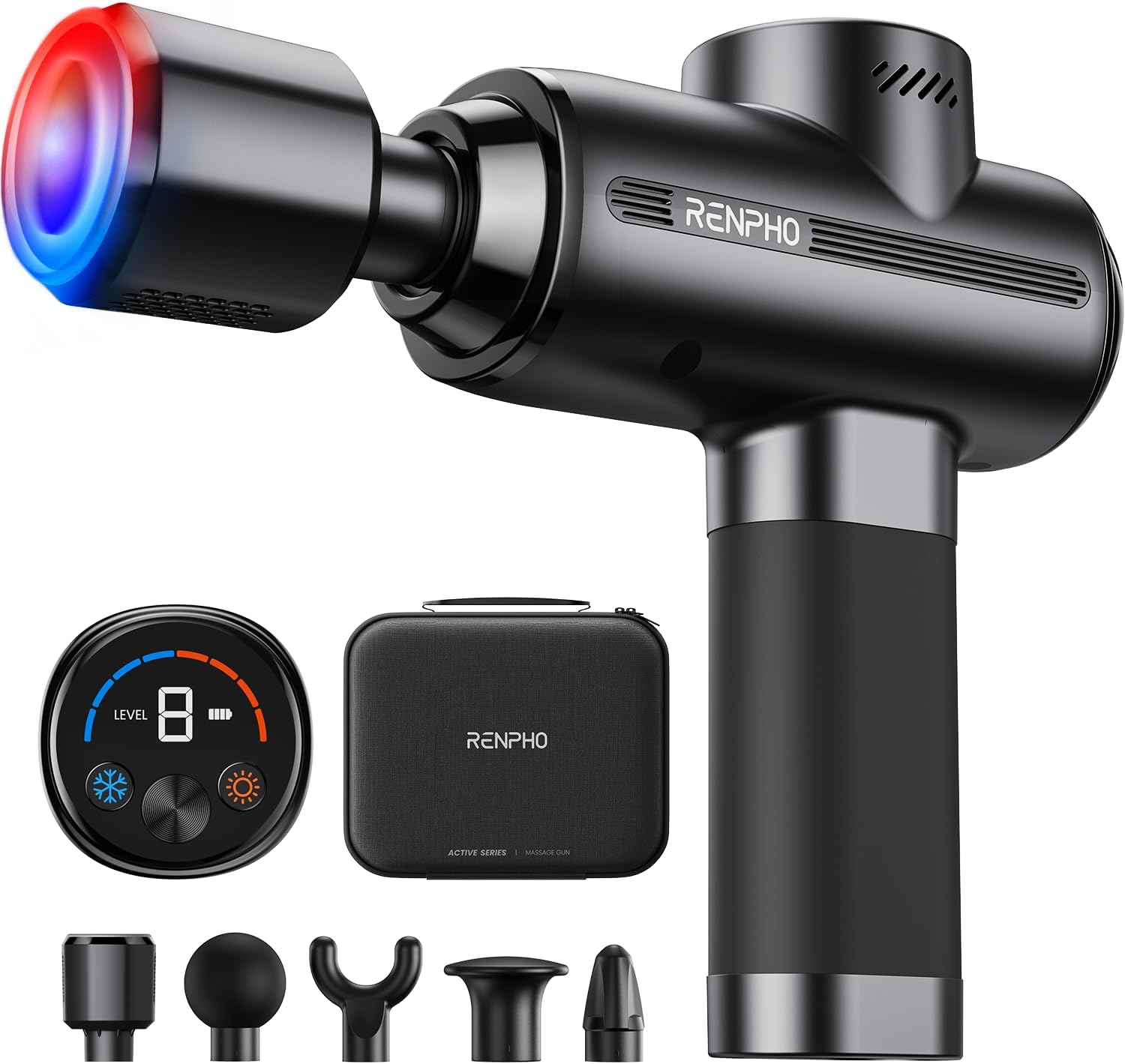
RENPHO Active Thermacool 2 Massage Gun with Intuitive Heat and Cold Control
The only gun here with both heat and cold, and the controls are designed to be intuitive
Temperature is a comfort feature, not a replacement for stroke depth
Prices and availability were captured from Amazon Creators API and may change.
Stall force and amplitude come first
Amplitude is stroke length in millimeters, and it's the difference between a thump that reaches the muscle belly and a buzz that tickles the surface. A 6mm stroke is light work: forearms, calves, the tops of the shoulders, the day after a hard session when everything feels tender. A 12mm stroke gets into quads, glutes, and hamstrings. A 16mm stroke is deep tissue territory, and honestly it's more than most people need.
Stall force is how much pressure the motor takes before the stroke stops. You can have 3,200 RPM printed in giant letters and still have a gun that quits the second you lean into a hamstring. That's the spec I want before I hand anything to a patient, and it's the spec most listings don't publish. When a listing hides it, you're buying on faith, and the return window is your only safety net.
This is why the adjustable amplitude on the Ascend stands out in this group. It isn't just two settings, it's a way to work up: start shallow on a tender area, go deeper once the tissue warms and you know the motor is holding.
The spec nobody prints: noise
A gun you don't want to turn on is a paperweight, and the fastest way to stop using one is to have it rattle your hand numb at the top speed while your partner gives you a look from the other room. Jancane sells the Mini as super quiet, which makes sense for a small gun with less mass to throw around, and quiet is the entire reason a mini exists in the first place.
For the full size guns here, I'd listen at the middle speeds, not the lowest setting, because almost every gun is polite at speed one and nobody uses speed one. If a manufacturer lists decibels only from a lab test at the lowest setting, discount it. Your living room at 9 p.m. is the real test.
RENPHO Ascend: the adjustable-amplitude pick
This is the one I'd hand to most people, and the reason is the adjustable amplitude. The 6 to 12mm range means one tool covers the light stuff and the heavy stuff, which matters if you share a house with someone whose shoulders need 6mm while your quads want everything the gun has.
The trade-off is that there's no heat or cold here, so if temperature is what gets you out the door on a cold morning, this isn't the one. You're also paying for the adjustable mechanism, which is real money for a feature that only pays off if you'll actually change the setting instead of leaving it on the same number forever. If you know you want deep work only, a fixed stroke gun can do that for less.
Jancane Mini: the one that actually leaves the house
Six speeds, four heads, and a body small enough to disappear into a jersey pocket or a laptop bag. This is the gun for the person who has never owned one and isn't sure they'll use it, and it's also the one I'd actually pack for a weekend trip.
Mini guns trade mass and stroke depth for portability, so set expectations. It's excellent on calves, forearms, neck, and the small muscles around the shoulder blades, and it is not the tool for digging into a 30 mile quad. The four included heads cover the usual shapes, and the gift angle is real: office workers and parents are exactly who ends up using a small gun like this on a Tuesday night. The quiet-first design is the right call for that buyer, since a mini that's loud defeats the point of being small enough to use anywhere.
Heat, cold, and the two guns that do it
Temperature control is the newest thing in this category, and it's genuinely useful if you understand what it's for. Heat before activity, cold after, that's the shorthand. Heat loosens up a stiff muscle so you feel ready to move; cold after a hard session is about comfort more than anything else.
The RENPHO Active Thermacool 2 is the only gun of the four with both heat and cold control built in, and the controls are designed to be intuitive rather than buried in a menu, which matters because you'll use a feature you can find without a manual. It's the gun I'd point at someone who rides in cold mornings and wants one device for both ends of the session.
The Massage Gun with Heat takes the simpler route: heat plus percussion, no cold, and it's the option I'd point at someone whose only complaint is that their muscles feel stiff and cold when they wake up.
Here's the trade-off neither listing will spell out: temperature is a comfort feature, not a substitute for amplitude. A gun with great heat and a shallow stroke is still a shallow stroke. Buy temperature control second, after you've confirmed the stroke depth.
What the budget options get right
You don't need a $400 gun. You need the right amplitude and enough stall force for your body and your sport. What cheaper guns give up is usually stall force, the ability to hold a stroke when you press, and sometimes noise control. What they don't give up is the basic job: getting blood moving through a muscle belly after a ride or a long day at a desk.
For light daily use, a smaller, quieter, simpler gun is often the better purchase, because the gun you'll actually pick up beats the one that stays in the case. The failure mode to avoid is buying on RPM and then discovering the stroke quits the first time you lean into a hamstring. That's the mistake I see most, and it's the reason I keep pushing people toward amplitude and stall force instead of the big number on the front of the box.
Battery, heads, and the details that decide
Battery claims are the least trustworthy numbers in this category, because they're measured in a lab at the lowest speed with no load. What I want to know is whether the gun survives a week of 20 minute sessions. For the mini, that's the whole ballgame: a small gun with a small cell either keeps up with a daily habit or it lives on the charger. The full size guns have more room for cells, but I'd still plan on charging weekly if you use one daily.
Heads matter less than people think. Most guns ship with a ball, a flat, and a fork or bullet, and the ball covers most of what you'll do. The Jancane's four heads are a nice bonus, not a reason to buy it by itself. The detail I care about more is the trigger and the speed control, because fiddling with an app mid-session is how a good recovery habit dies.
How to test any of these in the first 30 days
Use the return window deliberately. Day one: press the gun into your quad with real pressure, the way you'd work a tight muscle, and see whether the stroke holds or fades into a buzz. Day two: run it at the speed you'd actually use for 15 minutes and pay attention to your hand. If it's going numb, that's a gun you'll stop using. Day three: check the battery after a week of real sessions, not a lab spec.
If it fails any of those, send it back. Every gun here is a return-window experiment first and a long term purchase second, and the cheapest way to waste money is to keep a gun you don't enjoy turning on.
Who should buy which
Most people: the RENPHO Ascend, because adjustable amplitude covers more bodies and more situations than any single fixed stroke. Travel, desk, and first-time buyers: the Jancane Mini. Heat and cold both: the RENPHO Active Thermacool 2. Heat only, simple controls: the Massage Gun with Heat.
If you're dealing with a specific injury, see a professional first. A gun is for recovery and relaxation, never for treating pain or injury, and no amount of adjustable amplitude changes that.
What I'm watching next
I'm mid-season on my 2026 test set, with a logbook tracking stall force, stroke length, noise, and battery across a few hundred miles of Colorado trail. The interesting trend this year is temperature hardware, heat and cold showing up on guns at every price point, and the question I want answered is whether those features hold up after a summer of use or become the first thing to fail. The other thing I'm watching: whether budget brands start publishing stall force. The first one that does gets my attention.